

Searching San Diego County Property Records
San Diego County covers more than four thousand square miles and eighteen incorporated cities, and a property search here runs into that scale immediately. The county keeps one set of recorded documents, the cities keep their own permit and code files, and the tax position sits in a third office again. Knowing which one holds what is most of the difference between a search that answers the question and one that answers part of it.
Where the recorded documents are kept
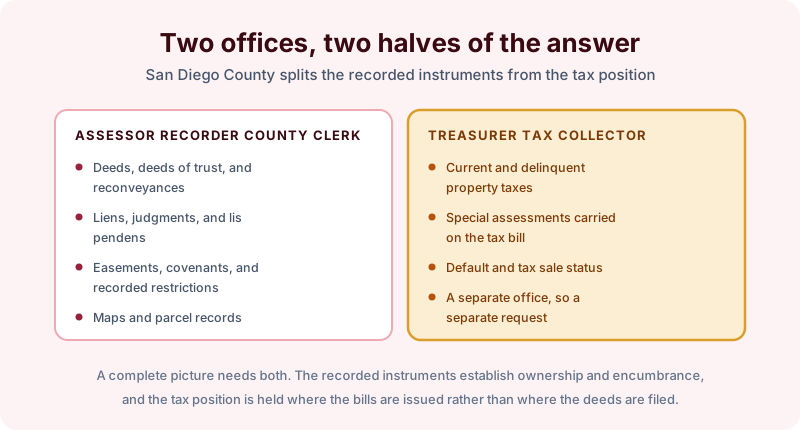
Recorded instruments for the whole county are held by the Assessor, Recorder, County Clerk, a single combined office. That is where deeds, deeds of trust, reconveyances, liens, judgments, easements, covenants, and lis pendens are indexed, and it is the primary source for any title search of a San Diego parcel.
Property tax status is a separate matter. Current and delinquent taxes, special assessments carried on the tax bill, and default or tax sale status are held by the Treasurer, Tax Collector. A search that reports the recorded encumbrances without the tax position has given you one half of the picture, which is why both are pulled together on a complete report.
What a title search on a San Diego parcel returns
The work is the same shape it is anywhere in California. An abstractor establishes the chain of ownership over the term searched, identifies the deeds of trust and whether any have been reconveyed, and pulls the recorded liens, abstracts of judgment, and state or federal tax liens indexed against the parcel and against the owner names supplied.
- The legal description and how it has been described across the chain, which on older county parcels is frequently by metes and bounds rather than by lot and tract.
- Recorded easements for access, utilities, and drainage, plus any covenants, conditions and restrictions binding the parcel.
- Assessment districts, which are common across the county's newer developments and which ride on the tax bill rather than appearing as a conventional lien.
Copies of the open instruments come attached, so the wording can be read rather than summarized. Anyone comparing the depth of coverage should look at how a current owner search differs from a full chain, because the term chosen decides whether an older easement or restriction appears at all.
The claims that never reach the county index
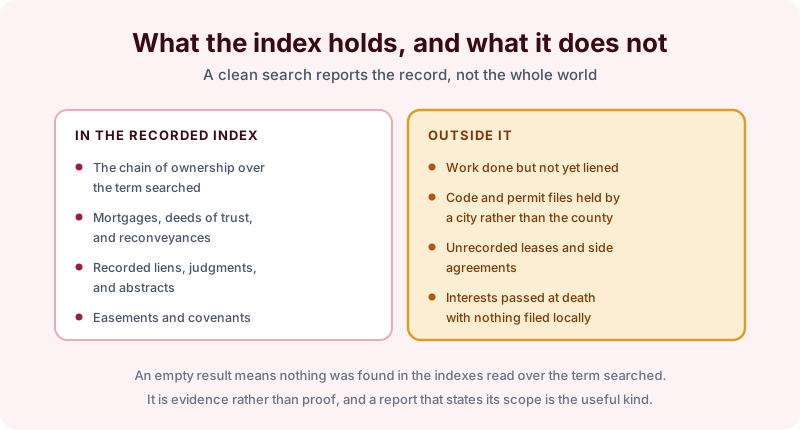
This is the part that catches buyers. Work performed on a property that has not yet been liened leaves no trace. Code enforcement and permit files are held by the city rather than the county, so an unpermitted addition in Chula Vista or Oceanside is a municipal record and not a recorded one. Unrecorded leases and side agreements bind the parties to them and sit outside the index entirely. And an interest that passed at death with nothing filed locally does not appear either.
So a clean report means nothing was found in the indexes read over the term searched, as of the date the work was done. That is real evidence and it is not proof, and any report worth relying on states its scope plainly enough for you to see the difference.
Scoping the search before you order
Send the street address, the assessor's parcel number if you have it, the legal description from the last recorded deed, and every record owner name rather than only the one on the purchase agreement. Where the owner is an entity, include prior entity names, since a lien recorded against a former name is indexed under that former name.
Then decide how far back to go. A refinance is usually asking about the current owner. A question about a severed mineral estate, an old restriction, or an easement granted before the subdivision existed needs a term long enough to reach the instrument that created it. Our guide to Riverside County title searches covers the neighboring county, where the same California framework applies through a differently organized office.
AFX Research has searched San Diego and every other California county since 1995, including in-person retrieval where an older instrument is not available as an online image.