

Searching Charleston County Property Records
Property records for Charleston and the rest of Charleston County, South Carolina are recorded with the Register of Deeds, and the ordinary machinery works the way it does elsewhere. What makes searches here distinctive is not the filing system but the land itself, along with two features of South Carolina law that surprise buyers from other states.
Foreclosure is judicial, so the court file is part of the chain rather than a separate matter. And the property tax assessment ratio depends on how the property is occupied, which means the tax picture can change sharply without the deed changing at all.
Where the Records Are Held
Four offices carry the work, and the tax function is divided between two of them.
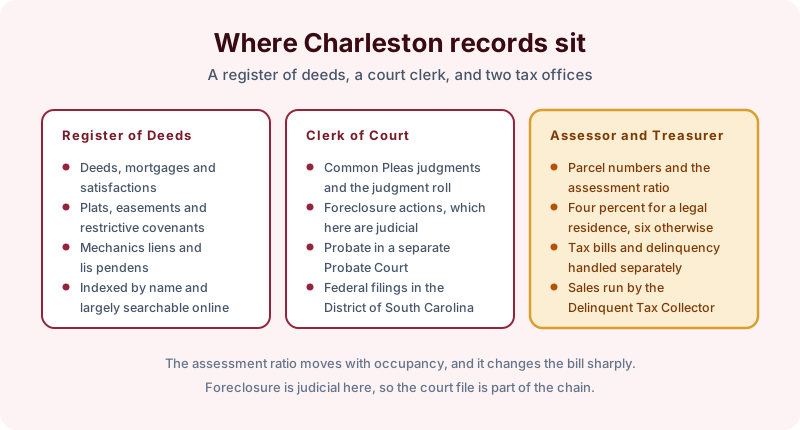
The Register of Deeds records deeds, mortgages and satisfactions, plats, easements, restrictive covenants, mechanics liens and lis pendens. The index runs by name and a substantial part of it is searchable online.
The Clerk of Court holds the Common Pleas judgment roll and the foreclosure actions, which in South Carolina are judicial proceedings. Probate sits in a separate Probate Court, and federal filings are with the District of South Carolina.
The Assessor and the Treasurer divide the tax function, with delinquent collection handled by the Delinquent Tax Collector. The assessment ratio is the part worth understanding, since an owner-occupied legal residence is assessed at four percent while other property is assessed at six, and the difference on a Charleston peninsula house is substantial.
What Makes Charleston Different
Three local features complicate searches here more than anything about the recording system does.
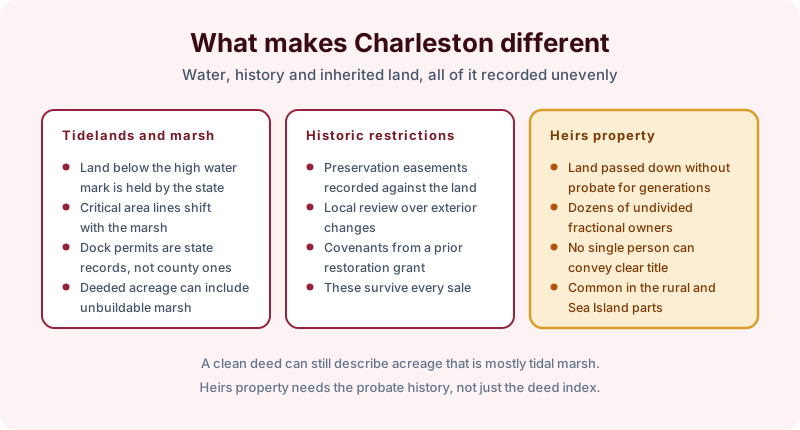
Tidelands and marsh. Land below the mean high water mark is held by the state in trust, the critical area line moves as the marsh does, and dock permits are state records rather than county ones. A deed reciting a generous acreage may be describing a parcel that is largely unbuildable tidal marsh, and the recorded description will not say so.
Historic restrictions. Preservation easements are recorded against a great many properties on the peninsula, local review governs exterior changes, and covenants imposed as a condition of a restoration grant survive every subsequent sale.
Heirs property. In the rural parts of the county and on the Sea Islands, land has passed down for generations without probate, leaving dozens of undivided fractional owners and no single person who can convey clear title. Establishing the ownership picture requires the probate history rather than the deed index alone.
Practical Consequences for a Search
- Judicial foreclosure means a court file. Title coming out of a foreclosure needs the Common Pleas file read alongside the deed, including any deficiency judgment and upset bid history.
- Plats matter more than usual. Marsh boundaries, dock corridors and old subdivision layouts are frequently only legible from the recorded plat.
- Chains run long on the peninsula. Colonial and antebellum conveyances are genuinely present in some chains, and reading them is a different skill from reading a modern deed.
- Short term rental regulation varies by municipality within the county, and it is a local licensing matter rather than a recorded restriction.
Ordering a Charleston County Search
Send us the property address, the tax map number if you have it, and every name the property may be held under, including family names where an estate may sit in the chain. Tell us whether the parcel touches marsh or water, because it changes what we look for in the plats.
A current owner search with judgment and lien searches covers most purchases and refinances. Where an estate, a foreclosure or possible heirs property sits in the chain, a full chain of title search is the more reliable scope.
A title search reports what was recorded and found in the indexes reviewed, as of the day the work was done. It does not establish where the critical area line runs, what is owed to any taxing authority, or whether a given restriction is enforceable. Those answers come from a surveyor, the Treasurer and counsel.