

The Technology Behind AFX Title Research
AFX has been pulling documents out of county recording offices since 1995, and has researched title on more than $1.3 trillion in property doing it. Most of what we have built since exists because some part of that work was being done by hand more times than it needed to be. This page is an account of what the software does now, written for the people who want to look under the hood before they buy, and for the teams who want to wire their own systems into ours.
What thirty years of county research taught us to build
There is no national register of land. There are thousands of county offices, each indexing under its own conventions, each with its own idea of what a document is and where it belongs. A firm covering the whole country the old way needs somebody in every one of them, and then has to live with whatever pace that produces.
We still have the people. Certified abstractors do the research, and one of them signs every report that leaves here. What has changed is the amount of mechanical work left between them and an answer. Retrieval, reading, cross-referencing and delivery are automated; the parts that call for a judgment are not, and never will be. Every capability named below is documented at length on the AFX technology platform, which serves each of our properties.
You can ignore the lot of it. Place an order in a browser, receive a report by email, and nothing on this page concerns you. It is simply what is happening while you wait.
The order, from submission to delivery
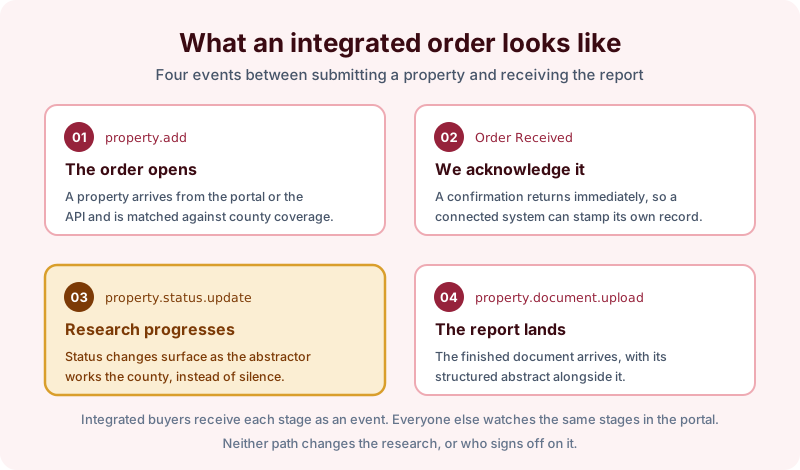
Orders arrive two ways and travel one. Some are typed into the order management portal, where an account also keeps its message history, its invoices and every report it has ever bought. The rest come in over an API connection from software that never opens a page at all.
Four moments in the life of a search are worth knowing about, and the difference between our two integration routes is who has to go looking for them. An API call answers a question you asked. A webhook answers one you did not, arriving at an endpoint of yours the moment an order changes hands, authenticated by token and requiring nothing on a timer. Teams that connect tend to use the two together.
Where the algorithms stop and a researcher starts
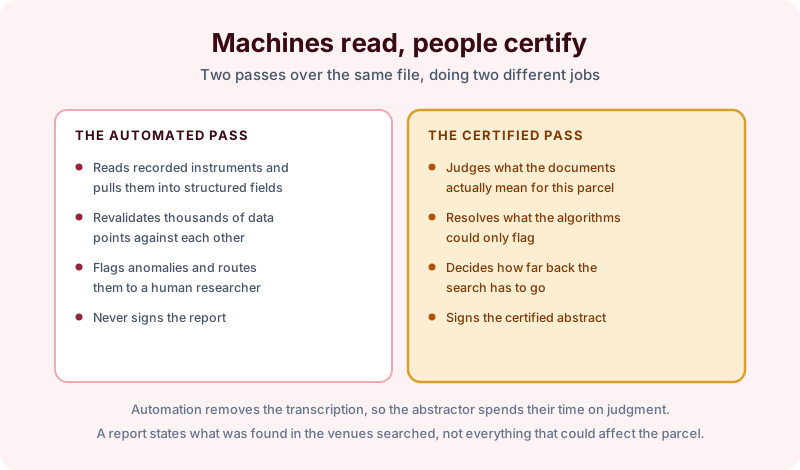
Title research fails in two directions. Something that should have been found is not, or something found is pinned to the wrong piece of land. Our error correction and classification algorithms are aimed squarely at both, checking thousands of data points against one another on every file and escalating anything that disagrees instead of choosing a winner.
Ahead of them, large language models handle the reading, turning recorded instruments into structured fields fast enough to make full national coverage practical rather than theoretical. They are not permitted to conclude anything. A certified abstractor weighs the findings and attaches their name, and what the report describes is what was found in the venues searched, not everything that might touch the parcel.
One platform, every industry we serve
The same machinery sits underneath work that looks nothing alike. A law firm wants a chain it can put in front of a judge. An environmental consultant wants recorded liens and use limitations attached to the right parcel for an assessment appendix. A servicer wants the same product several thousand times a month without variation between them.
Those are configuration problems rather than different businesses, which is why a standardised search can be shaped to an industry without becoming a bespoke project. The full list is on the industries we serve.
Reports that go out under your name
Plenty of our volume is resold. Somebody else researched it, somebody else signs the invoice, and the client at the end of the chain should not be reading our name on the cover. White-label templating settles that at the template, so consistency is automatic rather than something anyone has to police.
Setting it up takes a logo at print resolution and a conversation about layout. After that it looks after itself, and two products that ought to look different, a quick ownership check and a full chain of title report, can carry separate templates.
Getting the parcel right, and the data usable
An address is a poor way to name land. It can be new, it can be shared, and on rural ground it may not exist in any useful form. So an order can carry a Placekey identifier beside whatever address there is, the portal can draw the parcel on a map before research starts, and a coordinate pair can be turned back into an address for checking. A perfect search of the wrong ground reads exactly like a clean result on the right one, which is what makes this worth the trouble.
At the other end, a PDF suits a reader and nothing else. Where the next thing to handle a report is software, the same research is available as a fielded abstract, with owners, instruments, recording detail and encumbrances each in their own slot. Word and Excel cover the ground in between.
Questions we get from technical teams
Which platforms does AFX integrate with?
Encompass, Calyx and ICE Mortgage Technology are the ones we are asked about most, and we also connect to fund control systems and to platforms firms have built for themselves. Nothing about the connection assumes a particular vendor, so an in-house system is no harder to work with than a named one.
How long does an integration take to build?
Most engineering teams have had something working the same day they started. Credentials are issued as a token, the endpoints are documented, and our own developers stay on the thread while yours build rather than handing over a PDF and disappearing.
What is the difference between the API and webhooks?
One direction each. Your software calls our API to start a search, ask where one has got to, or fetch a finished report. We call your endpoint whenever an order moves, which spares you from asking the same question on a timer. Almost everyone who connects ends up wiring both.
Can the report carry our own branding?
Yes. Reports come out of a template we configure for you, so your mark is on the cover and your wording closes it out. We need a logo at print resolution and a short conversation about layout. Where two products should not look alike, they get separate templates.
What formats can we receive a report in?
PDF unless you say otherwise. Word where the report is edited before it goes on to a client, Excel where the findings are sorted or merged with other records, and a fielded data version where the thing reading it next is a machine.
How is our data protected in transit?
Traffic is encrypted, API and webhook credentials are issued as revocable tokens, and order data is visible only to the people working it. What leaves us is the publicly recorded material a search requires or produces, and nothing else.
If an integration is on your list, tell us what you are running and we will put you in touch with the people who built ours. Start from our support and contact page, or read through the products first.