

Searching Denver Property Records
Denver is unusual before you look at a single document. It is a consolidated city and county, so the same government does both jobs, and the offices you would visit separately in most places sit inside one administration. That simplifies some things and it does not remove the need to know which office holds what.
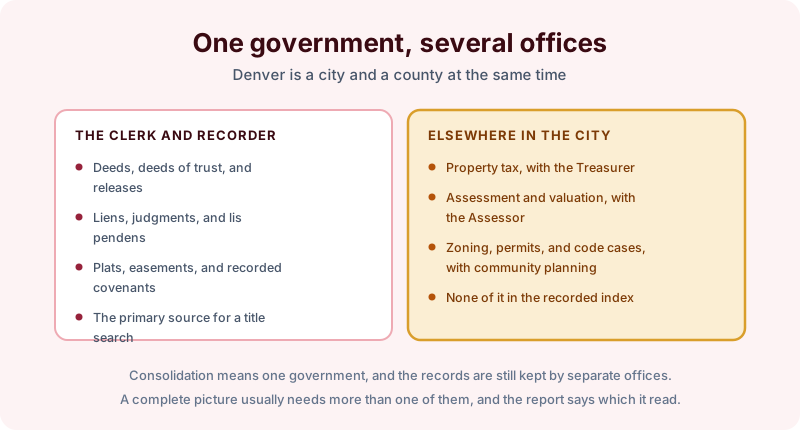
One government, several offices
Recorded instruments are held by the Denver Clerk and Recorder. Deeds, deeds of trust and their releases, liens, judgments, lis pendens, plats, easements, and recorded covenants are indexed there, and that office is the primary source for a title search of a Denver parcel.
The rest is elsewhere in the same city government. Property tax sits with the Treasurer, valuation with the Assessor, and zoning, permits, and code enforcement cases with community planning and development. None of those reach the recorded index, so a question about an unpermitted basement conversion is a municipal request rather than a title one.
Colorado secures loans differently
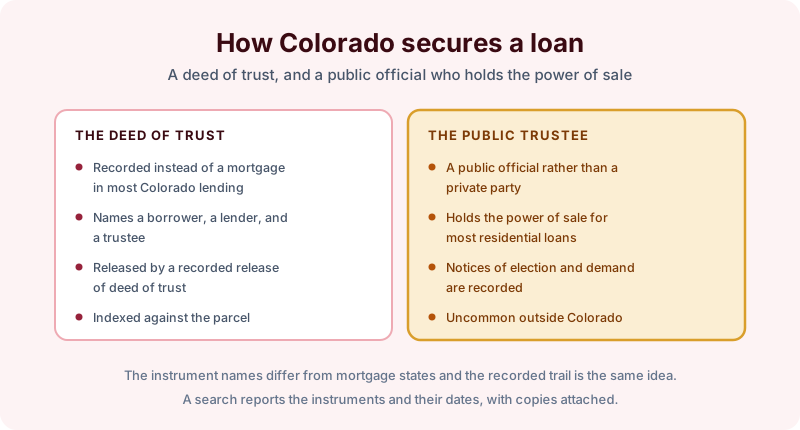
Most Colorado lending is secured by a deed of trust rather than a mortgage, and it is discharged by a recorded release of deed of trust. That much is familiar from other western states.
What is genuinely distinctive is the public trustee. In Colorado the power of sale on most residential loans is held by a public official appointed for each county rather than by a private trustee named in the document, and the notices that begin a foreclosure are recorded through that office. It is close to unique nationally, and it means the recorded trail on a distressed Denver property looks different from what an out of state reviewer expects.
The practical consequence for a buyer or a lender is that the sequence has its own vocabulary. A notice of election and demand starts the process rather than a notice of default, a cure period runs alongside it, and the sale is conducted by the trustee's office. Reading a Denver chain that contains one of these means reading it against that framework rather than against a mortgage state's, and the dates on those recorded notices are what establish where in the process a property actually sat.
What the search returns and what it does not
An abstractor establishes the chain of ownership over the term searched, identifies the deeds of trust and whether any have been released, and pulls the recorded liens, transcripts of judgment, and state or federal tax liens indexed against the parcel and the owner names supplied. Easements, covenants, and any special district or assessment obligation recorded against the property come with it, and copies of the open instruments are attached.
- It does not report unrecorded agreements, leases, or interests that were never filed.
- It does not report work performed on the property that has not yet been liened.
- It does not establish who owns the property today as a legal conclusion. That is an attorney's opinion, drawn from the record.
Scoping a Denver search
Send the street address, the schedule number from the Assessor, the legal description from the last recorded deed, and every record owner name including former names and any entity predecessors. Name variations matter here as much as anywhere, because a lien indexed under a former name stays indexed under that name.
Then set the term to the question, since a closing usually asks about the current owner while a boundary question or an old covenant needs a term long enough to reach the instrument that created it. Recording and indexing practice varies by county, so we confirm the local specifics before the work starts rather than assuming them. Our guide to Maricopa County property records covers a comparable large western metropolitan county.
AFX Research has searched Denver and every other Colorado county since 1995, including in-person retrieval where an older instrument is not available as an online image.