

Maricopa County Property Records: How to Search by Address
Maricopa County covers Phoenix, Mesa, Scottsdale, Glendale, Chandler and most of the surrounding valley, which makes it one of the busiest property records jurisdictions in the country. It is also one of the most commonly misunderstood, because the information people want sits in four different offices and only one of them is searchable the way most people expect.
If you are trying to look up a property by address, the short answer is that you start with the Assessor and finish with the Recorder. This guide explains why, what each office actually holds, and where a public records lookup stops being enough.
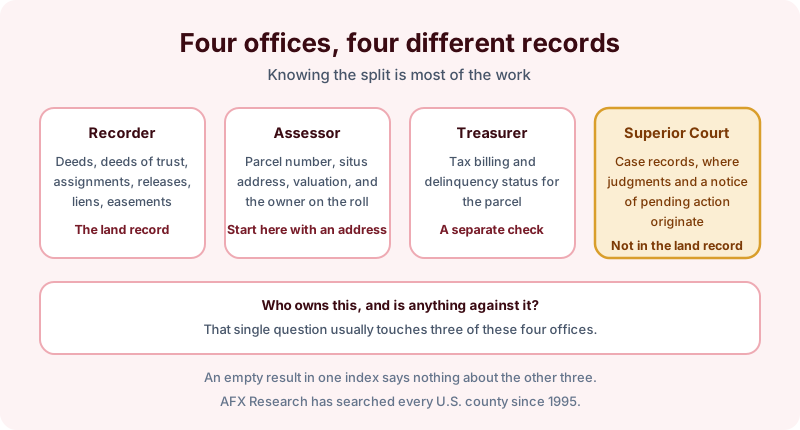
Four offices, four different records
Understanding the split saves most of the wasted effort.
- The County Recorder holds recorded documents: deeds, deeds of trust, assignments, releases, mechanics' liens, easements, and recorded notices. This is the land record.
- The County Assessor holds parcel data: the assessor's parcel number, the situs address, characteristics, valuation, and the owner as carried on the roll.
- The County Treasurer holds tax billing and delinquency status.
- The Superior Court holds case records, which is where judgments and a recorded notice of pending action originate.
A question like "who owns this house and is anything against it" therefore touches at least two offices, and frequently three.
Why you cannot search recorded documents by address
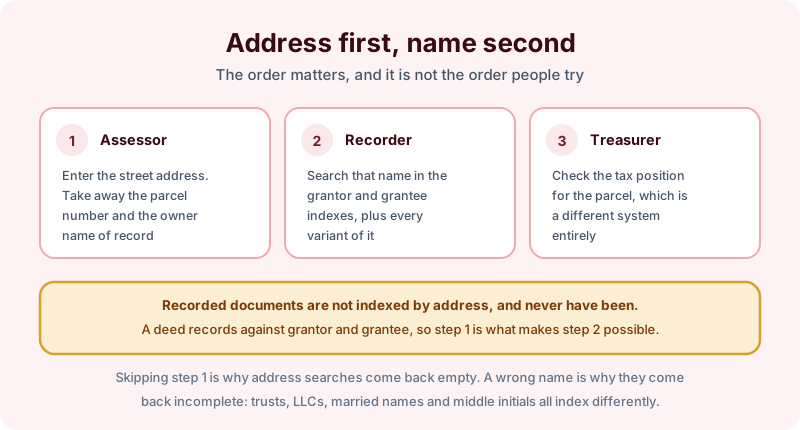
This is the single most common frustration, and it is not a website problem. Recorded documents are indexed by party name and by document number, because that is how the recording system has always worked. A deed records against grantor and grantee, not against a street address.
So the practical sequence is:
- Start at the Assessor with the address, and get the parcel number and the owner name of record.
- Take that name to the Recorder and search the grantor and grantee indexes.
- Check the Treasurer separately for the current tax position.
Skipping the first step is why address searches come back empty. Getting the name slightly wrong is why they come back incomplete, and name variants matter more than most people expect: an owner recorded as a trust, an LLC, a married name, or with a middle initial will index differently.
What a free public lookup will not tell you
Online access has improved enormously, and it still answers a narrower question than most buyers think.
- It does not confirm the chain of title. Seeing the current deed is not the same as establishing that every prior transfer was valid and unbroken.
- It does not surface everything by name. Judgments, state and federal tax liens, and probate matters sit in other indexes and other offices.
- It cannot show unrecorded interests. An unrecorded contract, an occupant's claim, or an agreement between neighbors leaves no filing to find.
- It does not interpret anything. Whether an old restriction is enforceable, or whether a description covers the land you think it covers, is a legal question.
An empty result means nothing was recorded in the index searched. It does not mean nothing exists.
When to order a title search instead
A public records lookup is the right tool for a quick question: who is the owner of record, what is the parcel number, is the tax bill current. It is the wrong tool once money is moving.
Order a search when you are buying, lending, taking a lien position, evaluating an auction property, or resolving a boundary or ownership dispute. A certified abstractor searches the indexes properly, runs the name variants, retrieves the actual instruments, and reports what is of record with copies attached. For Arizona generally, our guide to Arizona property records covers the state level picture, and what a title search is explains what the report contains.
AFX Research has performed searches in every U.S. county since 1995, including in-person searches where the older Maricopa indexes are not online.