

Searching DuPage County Property Records
Property records for DuPage County, Illinois are recorded with the County Clerk, which took over the recorder function when the two offices merged. That is the first thing out-of-state searchers get wrong, and the second is assuming Illinois works like the states around it. It does not. Foreclosure is judicial, every deed arrives with a transfer declaration, and delinquent taxes are sold as certificates that can sit in a chain for years without conveying anything.
None of that is difficult. All of it produces instruments that read oddly if you have not seen them before.
Where the Records Are Held
Three offices between them hold what a search needs, and the assessment function is spread wider than in most states.
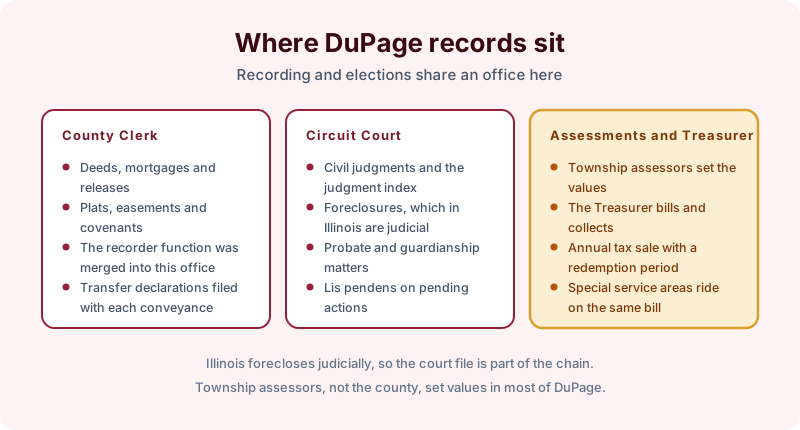
The County Clerk records deeds, mortgages, releases, plats, easements and covenants, and holds the transfer declarations filed with each conveyance. The recorder function was folded into this office, so there is no separate Recorder of Deeds to visit.
The Circuit Court holds civil judgments and the judgment index, the foreclosure actions, probate and guardianship matters, and lis pendens on pending cases. Because Illinois forecloses judicially, a foreclosure in the chain means a court file to read rather than a trustee's deed to accept.
Assessment is split. Township assessors set values across most of DuPage, the Supervisor of Assessments oversees the process, and the Treasurer bills and collects. Special service areas and other districts ride on the same bill, which makes the tax statement worth reading in full rather than glancing at the total.
How an Illinois Transfer Works
Three features account for most of the confusion, and each leaves a distinct trail in the record.
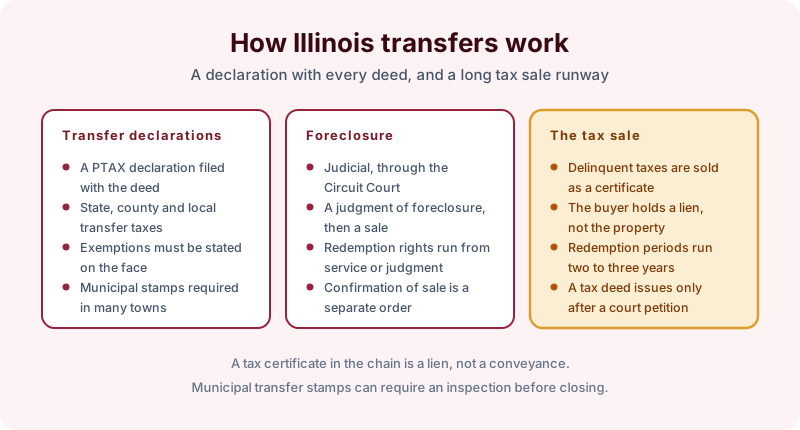
Transfer declarations. A PTAX declaration accompanies the deed, state and county transfer taxes apply, and any claimed exemption has to be stated on the face of the instrument. Many municipalities add their own transfer stamp, and in several DuPage towns the stamp requires an inspection or a zoning sign-off before closing, which is a local requirement rather than a recording one.
Judicial foreclosure. The sequence runs through the Circuit Court as a judgment of foreclosure, then a sale, then a separate order confirming the sale. Redemption rights run from service or from the judgment depending on the circumstances. Title coming out of that process needs the court file read alongside the deed.
The tax sale. Delinquent taxes are sold as a certificate, and the buyer holds a lien rather than the property. Redemption periods commonly run two to three years, and a tax deed issues only after a court petition. A tax certificate sitting in a chain is easy to misread as a conveyance and is nothing of the kind.
What Makes DuPage Specific
- Subdivision covenants are widespread and old. Much of the county was platted in successive postwar waves, and declarations from the 1950s onward are still recorded and occasionally still enforced.
- Stormwater and drainage obligations matter. The county operates an active stormwater program, and detention easements appear on a great many commercial and residential plats.
- Municipal boundaries are complicated. Unincorporated pockets sit beside incorporated towns, and which body levies a charge decides which office can tell you whether it is paid.
- Entity ownership is heavy in the rental and commercial stock, so name searches have to cover every variant a company has used.
Ordering a DuPage County Search
Give us the property address, the parcel identification number if you have it, and every name the property may be held under, including entity names and any former names of an individual owner. Tell us whether the file involves a purchase, a refinance or diligence, because it changes how far back the name searches run.
For a purchase or refinance a current owner search with judgment and lien searches usually fits. Where the property has been through a foreclosure, a tax sale or an estate, a full chain of title search is the safer scope.
A title search reports what was recorded and found in the indexes reviewed, as of the day the work was done. It does not establish amounts owed, which come from the Treasurer and the lender, and it is not a legal opinion on what any recorded instrument means.