

Searching Jefferson County Property Records
Jefferson County is Louisville, and since 2003 the two have run as a single metro government. The bigger surprise for anybody searching from out of state is not the merger. It is that Kentucky does not have a register of deeds at all, and the land records sit with an office that also handles vehicle titles and business filings.
Three further Kentucky habits shape what a chain of title looks like here, and all three are easy to read past.
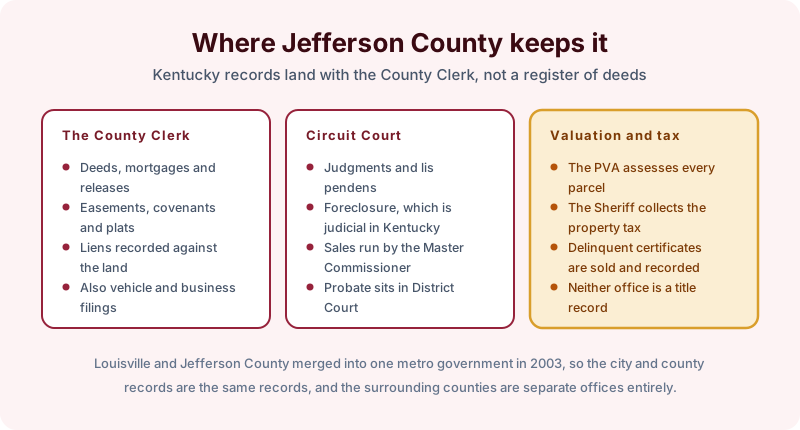
The County Clerk holds the land records
The Jefferson County Clerk records deeds, mortgages and releases, along with easements, restrictive covenants, plats and liens against real property, indexed by the names of the parties. The same office handles a good deal that has nothing to do with land, which is normal in Kentucky and occasionally confusing to searchers expecting a dedicated land records office.
Court filings sit with the Circuit Court. Judgments, lis pendens and foreclosure actions are there, and Kentucky is a judicial foreclosure state, so a foreclosed property has a case file behind it. Probate is handled in District Court, which is a third docket again.
Assessment and collection are separate offices once more. The Property Valuation Administrator assesses every parcel, and the Sheriff collects the property tax. Delinquent tax bills are sold as certificates of delinquency and those are recorded, which means a tax problem does appear in the land record even though the assessment itself is not a title record.
Three Kentucky particulars
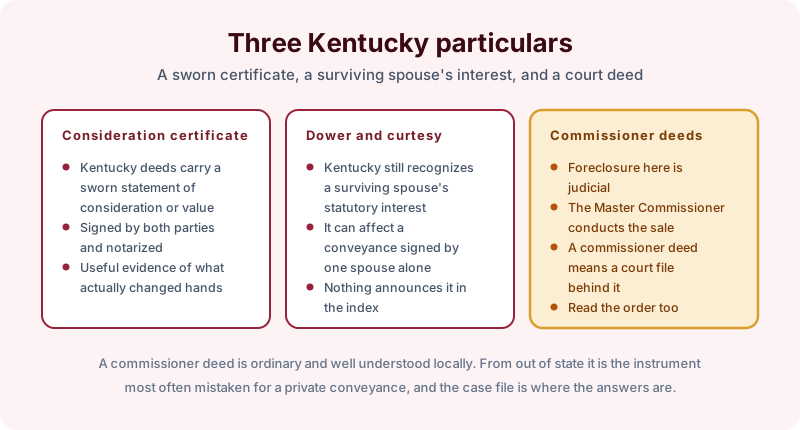
The consideration certificate. Kentucky deeds carry a sworn statement of the consideration paid, or of fair market value where the transfer was not a sale, signed by both parties and notarized. It is a formality that is genuinely useful, because it is contemporaneous sworn evidence of what actually changed hands.
Dower and curtesy. Kentucky still recognizes a surviving spouse’s statutory interest in the other spouse’s real property, a doctrine most states abolished long ago. It can affect a conveyance signed by one spouse alone, and nothing in the index announces that a grantor was married at the time.
Commissioner deeds. A judicial foreclosure sale here is conducted by the Master Commissioner, and the resulting instrument is a commissioner deed. It is entirely ordinary and well understood locally. From out of state it is the instrument most often mistaken for a private conveyance, and the court file behind it is where the answers about notice and confirmation are.
What a Jefferson County search covers
- The chain of title over the term you specify, with the recorded instruments attached rather than summarized.
- Mortgages and releases, along with any assignments filed since.
- Liens and judgments of record, including mechanics liens, certificates of delinquency and judgments docketed against the owner.
- Easements, covenants and plat restrictions running with the land, which in the older Louisville neighborhoods regularly predate 1920.
- Foreclosure history, including any commissioner deed and the case number behind it.
What the record will not tell you
An unrecorded instrument is not in the index, and under Kentucky law a conveyance can be good between the parties while being ineffective against a later purchaser without notice. Whether that matters in a given situation is a legal question for counsel rather than for an abstractor.
Boundaries are the other limit. A legal description is not a survey and a search does not locate anything on the ground. Nor does it report the condition of the building, who is occupying it, or whether a code case is open with the metro government.
Ordering a Jefferson County search
Supply the street address, the parcel identifier from the PVA if you have it, and every name the property has been held in, including entities, trusts and both spouses. Say whether the chain runs through an estate, a foreclosure or a tax sale, and how far back you need the search to reach.
A title search reports what was recorded and indexed in the offices searched, as of the day the work was done. It is not proof that nothing else exists, it is not a title insurance commitment and it is not a legal opinion. Our report names the indexes reviewed and attaches copies of what was found.