

Searching Oklahoma County Property Records
Oklahoma County is Oklahoma City and the towns around it, and searching property here involves one structural feature and one substantive one. Land records are kept by the County Clerk rather than by a recorder or a register of deeds. And severed mineral interests are so common across the state that they are better treated as the expected case than as a complication.
Neither is difficult once you know. Both produce incomplete searches when you scope the work as though the property were in a state without a mineral history.
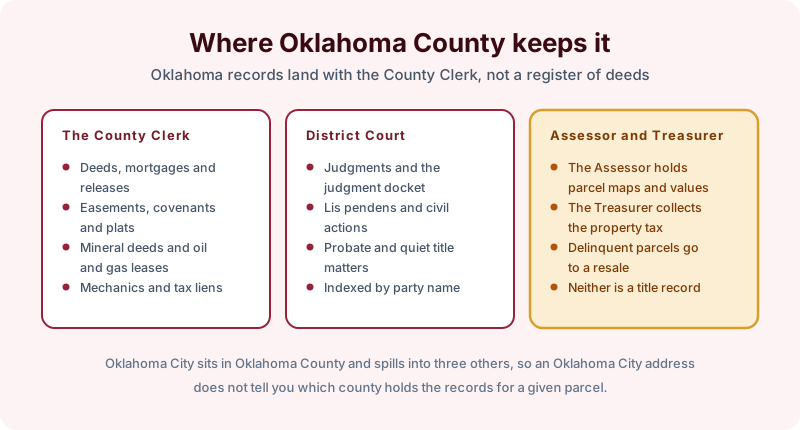
Three offices hold the record
The County Clerk records deeds, mortgages and releases, easements, restrictive covenants and plats, along with mechanics liens and tax liens. Mineral deeds and oil and gas leases are recorded in the same series, indexed by the names of the parties.
Court filings sit with the District Court. Judgments and the judgment docket, lis pendens, civil actions, probate and quiet title matters, all indexed by party name in a different office with a different index.
Assessment and collection are separate again. The County Assessor maintains parcel maps and valuations, and the County Treasurer collects the property tax. Delinquent parcels move toward a county resale, which is a recorded process and does appear in the land record, although the assessment itself is not a title record.
Worth confirming before anything is ordered is the county itself. Oklahoma City spills into Canadian, Cleveland and Pottawatomie counties as well as Oklahoma County, so an Oklahoma City mailing address does not settle where the records are.
Two Oklahoma particulars
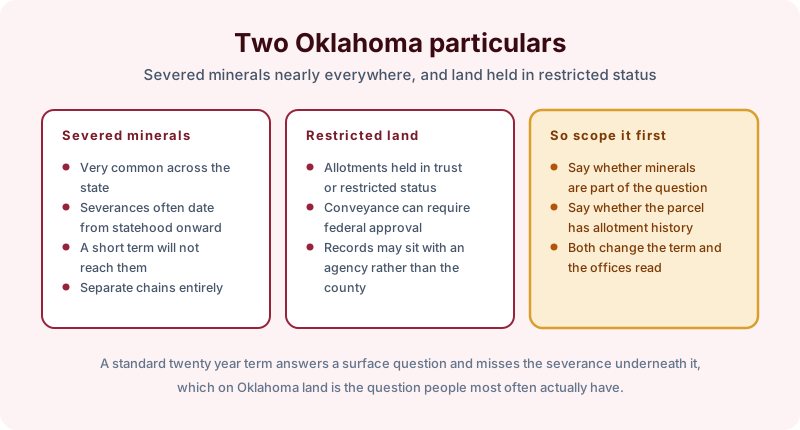
Severed minerals. Across Oklahoma the mineral estate has frequently been separated from the surface, in many cases by instruments dating from statehood onward. That means a parcel can have two chains running in parallel, and a standard twenty year term answers the surface question while missing the severance entirely. If minerals are part of what you are buying or lending against, the term has to be set against the severance rather than against the transaction.
Restricted land. Oklahoma has substantial acreage originally allotted to tribal citizens, some of it still held in trust or in restricted status. Conveying or encumbering that land can require federal approval, and some of the relevant records sit with a federal agency rather than with the county. It is not an obstacle so much as a different set of offices to read.
What an Oklahoma County search covers
- The chain of title over the term you specify, with the recorded instruments attached rather than summarized.
- Mortgages and releases, along with assignments and any foreclosure in the chain.
- Liens and judgments of record, including mechanics liens, tax liens and judgments docketed against the owner.
- Mineral deeds, reservations and oil and gas leases where the scope includes them.
- Easements, covenants and plat restrictions running with the land.
What the record will not tell you
An unrecorded instrument is not in the index, and under Oklahoma law a conveyance can be good between the parties while being ineffective against a later purchaser without notice. Whether that applies in a given situation is a legal question for counsel.
A records search also cannot establish who owns a severed mineral interest today. Interests pass at death with nothing filed in the county, so the last grantee named in the record is not necessarily the present owner, and present mineral ownership is a title opinion written by an attorney rather than a search result.
Boundaries are the other limit. A legal description is not a survey and a search does not locate anything on the ground.
Ordering an Oklahoma County search
Supply the street address, the parcel identifier if you have it, and every name the property has been held in. Say whether minerals are part of the question and whether the parcel has any allotment history, because both change the term and the offices read.
A title search reports what was recorded and indexed in the offices searched, as of the day the work was done. It is not proof that nothing else exists, it is not a title insurance commitment and it is not a legal opinion. Our report names the indexes reviewed and attaches copies of what was found.