

Searching Pierce County Property Records
Property records for Tacoma and the rest of Pierce County, Washington are recorded with the County Auditor, which is the office other states call a recorder. Washington secures loans with deeds of trust, clears them with reconveyances, presumes that property acquired during a marriage is community property, and collects an excise tax on nearly every transfer through an affidavit filed alongside the deed.
The feature that most often catches searchers out has nothing to do with any of that. Substantial land in and near the county is held in federal trust status for the Puyallup Tribe and does not appear in the county index at all.
Where the Records Are Held
Three offices carry the work, and the tax function is combined rather than split.
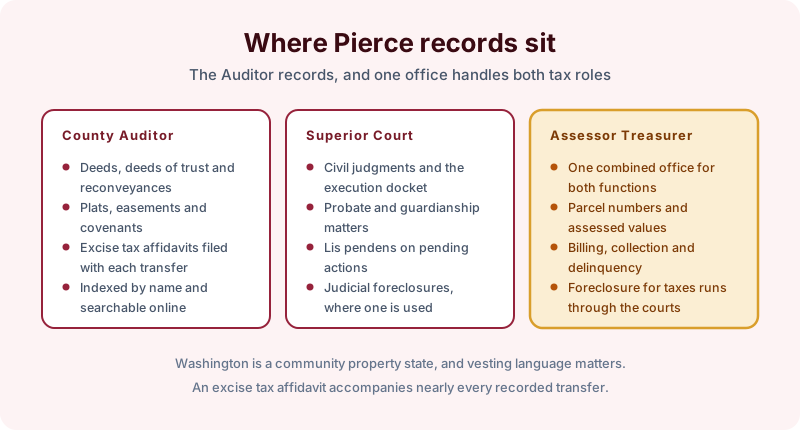
The County Auditor records deeds, deeds of trust, reconveyances, plats, easements and covenants, and holds the real estate excise tax affidavits filed with each transfer. The index runs by name and a substantial part of it is searchable online.
The Superior Court holds civil judgments and the execution docket, probate and guardianship matters, lis pendens, and any judicial foreclosure where one is used rather than the usual trustee's sale.
The Assessor Treasurer is a single combined office handling parcel numbers, assessed values, billing, collection and delinquency. Foreclosure for unpaid property taxes runs through the courts, so a tax foreclosure in the chain means a court file as well as a deed.
How a Washington Transfer Works
Three features shape what a search has to look for, and the third changes the scope entirely.
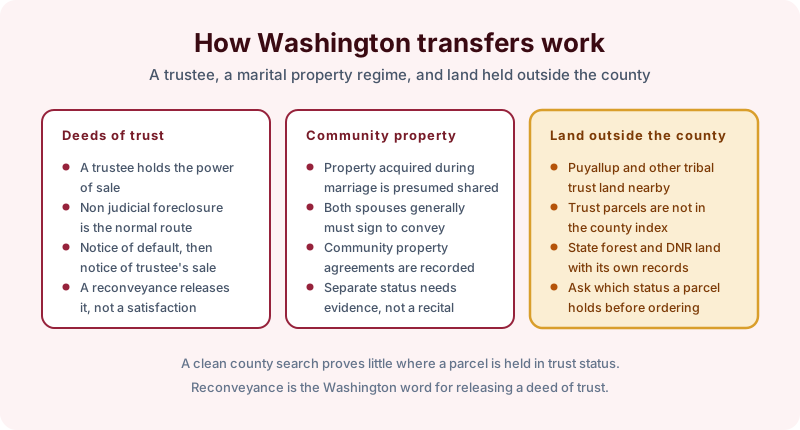
Deeds of trust. A trustee holds the power of sale rather than the lender, which is what allows non-judicial foreclosure. The sequence is a recorded notice of default, then a notice of trustee's sale, then a trustee's deed. When the loan is paid, the instrument that clears it is a reconveyance, and a missing reconveyance is a common cloud on an older chain.
Community property. Property acquired during a marriage is presumed community property, both spouses generally have to sign to convey or encumber it, and community property agreements are recorded instruments that can change how title passes at death. A recital that property is separate is not by itself evidence that it is.
Land outside the county index. Tribal trust and restricted parcels are documented through federal land title records rather than the Auditor, and state forest and Department of Natural Resources land carries its own records. A county search on a parcel in trust status will correctly return very little, which is an accurate answer to a question the county record cannot address.
What Makes Pierce County Specific
- Hazard overlays are extensive. Lahar and volcanic hazard zones from Mount Rainier, along with liquefaction and landslide areas, drive disclosure and local permitting rather than recorded restrictions, though some plats carry notes.
- Timber and forest land classifications carry current-use tax treatment, and removing land from the classification triggers compensating tax that attaches to the parcel.
- Tideland and shoreline parcels around Commencement Bay and the Puget Sound frontage raise the same ownership questions as any coastal state, with the bed generally held by the state.
- Older Tacoma chains run long, with nineteenth century conveyances and railroad grant history present in parts of the city.
Ordering a Pierce County Search
Send us the property address, the parcel number if you have it, and every name the property may be held under, including both spouses and any entity variants. Tell us whether the parcel is fee land, trust land or classified forest land, because that decides where the records actually are.
A current owner search with judgment and lien searches covers most purchases and refinances. Where a trustee's sale, a tax foreclosure or an estate sits in the chain, a full chain of title search is the more reliable scope.
A title search reports what was recorded and found in the indexes reviewed, as of the day the work was done. It does not establish amounts owed, does not report hazard designations, and is not a legal opinion on what any recorded instrument means.