

Searching Pinellas County Property Records
Property records for St. Petersburg, Clearwater and the rest of Pinellas County, Florida are recorded with the Clerk of the Circuit Court, an office that handles the land records and the court file at the same time. That makes some searches easier here than elsewhere and makes one Florida feature catch out-of-state buyers repeatedly, which is homestead.
Florida homestead is a constitutional protection rather than a tax program, both spouses generally have to join to convey or encumber it, and a deed signed by one spouse alone can be void rather than merely defective.
Where the Records Are Held
Three offices between them hold what a search needs, and the first of them does unusually broad work.
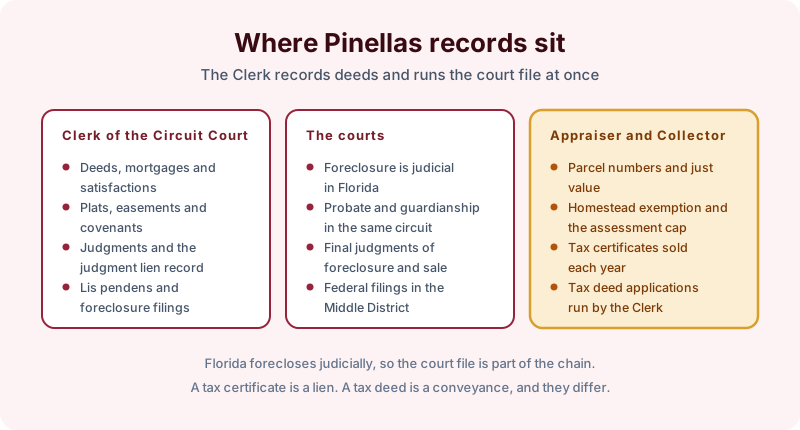
The Clerk of the Circuit Court records deeds, mortgages, satisfactions, plats, easements and covenants, and also maintains the judgment lien record and the lis pendens and foreclosure filings. Having both in one office means a judgment search and a deed search are run in the same place.
The courts matter here because Florida forecloses judicially. A foreclosure in the chain means a final judgment, a sale and a certificate of title issued by the Clerk, and the court file is part of the chain rather than a separate matter. Probate and guardianship sit in the same circuit, and federal filings are with the Middle District of Florida.
The Property Appraiser sets just value and administers the homestead exemption with its assessment cap, while the Tax Collector bills and collects. Delinquent taxes are sold as certificates each year, and a tax deed issues only after a separate application process run through the Clerk.
How a Florida Transfer Works
Three features account for most of the surprises, and each leaves its own trail.
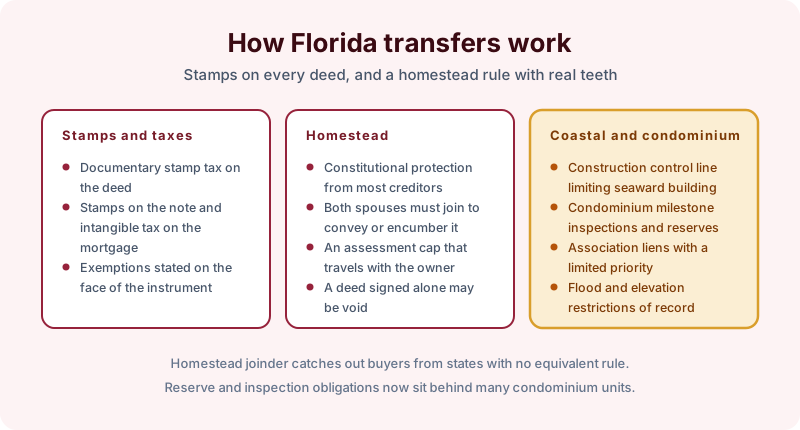
Stamps and taxes. Documentary stamp tax applies to the deed, stamps apply to a promissory note, and an intangible tax applies to the mortgage. Any claimed exemption is stated on the face of the instrument, and the amounts paid are a useful cross-check on the consideration actually recited.
Homestead. The protection runs against most creditors, both spouses must join to convey or encumber regardless of who holds title, and the assessment cap travels with the owner under the portability rules. The joinder requirement is the one that produces defective deeds, usually where a buyer from a non-homestead state assumed one signature was enough.
Coastal and condominium rules. The coastal construction control line restricts seaward building on much of the Pinellas shoreline. Condominium milestone inspections and structural reserve obligations now sit behind a great many units, and association liens carry a limited priority over an existing first mortgage.
What Makes Pinellas Specific
- The county is heavily built out. Redevelopment of older parcels is common, which means platting, replatting and vacated rights of way appear frequently in chains.
- Condominium stock is large and old. Declarations from the 1970s onward are still recorded and still governing, and the post-2021 inspection and reserve requirements reach many of them.
- Flood and elevation restrictions are widespread, including recorded covenants from elevation grants and buyout programs.
- Short term rental regulation varies by municipality within the county and is a local licensing matter rather than a recorded restriction.
Ordering a Pinellas County Search
Give us the property address, the parcel identification number if you have it, the unit number where the property is a condominium, and every name the property may be held under including both spouses and any entity variants. Tell us whether the property is or was a homestead, because it changes what has to be checked on the execution of past deeds.
For a purchase or refinance a current owner search with judgment and lien searches usually fits. Where a foreclosure, a tax deed or an estate sits in the chain, a full chain of title search is the safer scope.
A title search reports what was recorded and found in the indexes reviewed, as of the day the work was done. It does not establish amounts owed, which come from the Tax Collector and the association, and it is not a legal opinion on what any recorded instrument means.