

Searching Sacramento County Property Records
Property records for Sacramento County, California are recorded with the County Recorder, and the mechanics of a California transfer differ enough from the rest of the country that out-of-state buyers and lenders regularly misread them. Loans are secured by deeds of trust rather than mortgages, releases are called reconveyances, judgments do not touch land until an abstract is recorded, and a sale triggers a reassessment that arrives as a separate bill months later.
None of that is difficult once you know the vocabulary. All of it causes trouble when you assume the vocabulary you already have.
Where the Records Are Held
Three offices between them hold what a search needs, and the tax function is split across two of them.
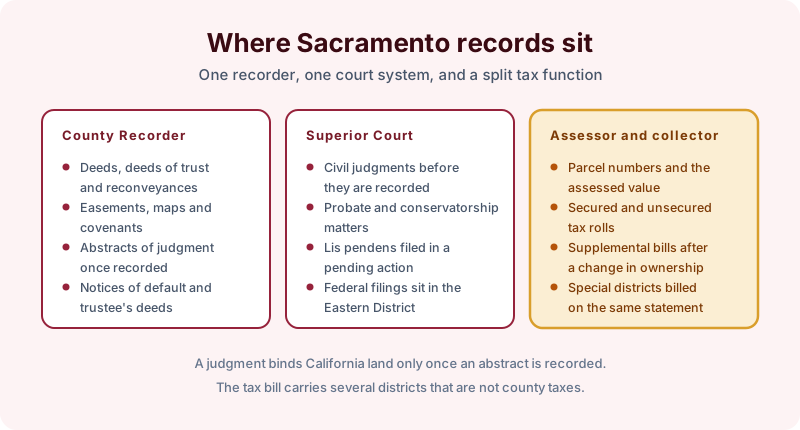
The County Recorder records deeds, deeds of trust and reconveyances, easements, subdivision maps, covenants, and the notices that drive a non-judicial foreclosure. Abstracts of judgment appear here once recorded, which is the step that makes a judgment a lien on California land.
The Superior Court holds the civil judgments themselves, probate and conservatorship matters, and lis pendens filed in pending actions. Federal filings sit with the Eastern District of California. A judgment that exists in the court file and was never abstracted and recorded does not encumber the property, which is a distinction worth checking rather than assuming either way.
The Assessor maintains parcel numbers and assessed values while the Tax Collector bills and collects. The bill itself carries more than county tax, since school bonds, Mello-Roos community facilities districts and other special assessments ride on the same statement.
How a California Transfer Works
Three features account for most of the confusion, and each of them leaves a distinct trail.
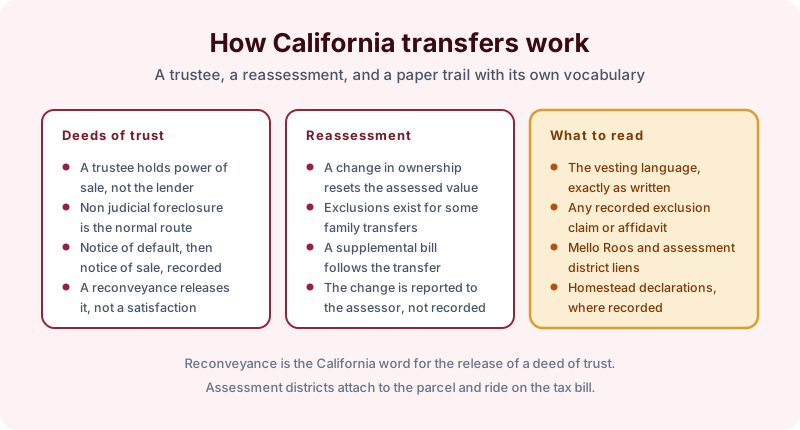
The deed of trust. A trustee holds the power of sale rather than the lender, which is what allows non-judicial foreclosure. The sequence is a recorded notice of default, then a recorded notice of sale, then a trustee's deed upon sale. When the loan is paid, the instrument that clears it is a reconveyance, not a satisfaction, and a missing reconveyance is one of the most common clouds on a California chain.
Reassessment. A change in ownership resets the assessed value, and a supplemental tax bill follows the transfer rather than accompanying it. Several family transfers are excluded, and a claim for an exclusion may or may not appear in the record. The change itself is reported to the assessor, not recorded.
Vesting language. California distinguishes carefully between joint tenancy, tenancy in common, community property and community property with right of survivorship, and the exact words on the deed decide what happens on a death. Read them rather than paraphrasing them.
What Makes Sacramento Specific
- Assessment districts are widespread. Much of the suburban growth in Elk Grove, Natomas and the eastern county was financed through Mello-Roos districts, and those liens attach to the parcel.
- Flood and levee obligations matter. Large parts of the county sit behind levees, and reclamation district assessments appear on tax bills and occasionally in recorded instruments.
- Older central city chains run long. Downtown and Midtown parcels carry nineteenth century chains with restrictive covenants that are still recorded, some of them unenforceable but not removed.
- Entity ownership is heavy in the rental stock, so name searches have to cover every variant of an LLC name.
Ordering a Sacramento County Search
Give us the property address, the assessor's parcel number if you have it, and every name the property may be held under, including entity names and any former names of an individual owner. Tell us whether the file involves a purchase, a refinance or diligence, because it changes how far back the name searches run.
For a purchase or refinance a current owner search with judgment and lien searches usually fits. Where the property has been through a trustee's sale, a probate or a series of related-party transfers, a full chain of title search is the safer scope.
A title search reports what was recorded and found in the indexes reviewed, as of the day the work was done. It does not establish amounts owed, which come from the Tax Collector and the beneficiary, and it is not a legal opinion on what any recorded instrument means.