

Searching Travis County Property Records
Travis County covers Austin and a good deal of the hill country around it, and the land records themselves are straightforward. The complication sits on the tax bill rather than in the deed, because a parcel here can be taxed by bodies that most buyers have never heard of and that no deed will mention by name.
That is the thing worth establishing early, alongside the fact that Texas does not publish what anybody paid.
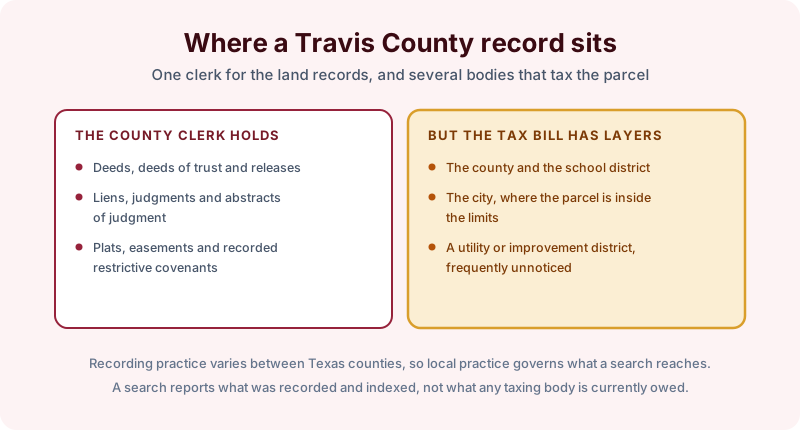
The county clerk holds the land records
In Texas the county clerk is the recording office, and in Travis County it behaves conventionally. Deeds, deeds of trust and releases, liens and abstracts of judgment, mechanic's and materialman's liens, plats, easements and recorded restrictive covenants, all indexed by grantor and grantee name.
Texas uses a deed of trust rather than a mortgage, with a trustee holding power of sale for the lender. A searcher expecting a mortgage index in a Texas county is looking for the wrong instrument name, and the release is a release of lien rather than a satisfaction.
Judgments are worth a specific note. A judgment becomes a lien on real property in a Texas county when an abstract of judgment is recorded there, not when the judgment is entered. So the court file and the land record answer different questions, and a judgment that exists is not necessarily a lien that attaches.
Districts that tax the same parcel
This is where Travis County surprises people. Texas allows the creation of districts with the power to levy against the parcels inside them, and the Austin metro is full of them. A municipal utility district funds water, sewer and drainage in an area the city has not annexed. A public improvement district funds roads, landscaping and amenities. Emergency services districts fund fire and ambulance coverage outside city limits.
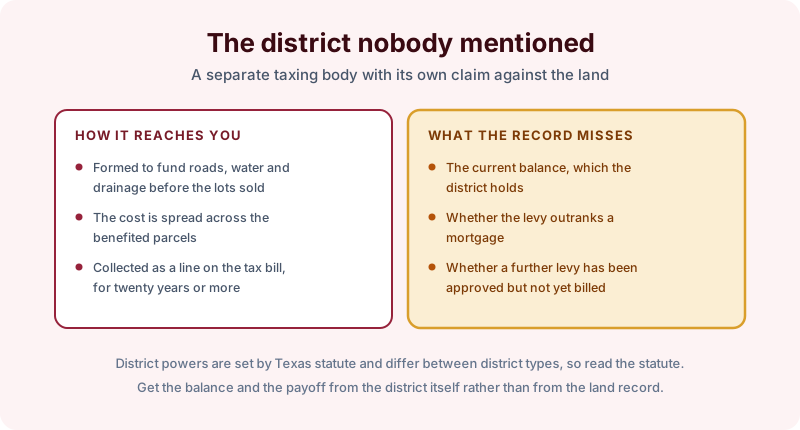
Each of those appears as a line on the tax bill, each runs with the land rather than with the owner, and each can continue collecting for twenty or thirty years after the developer who petitioned for it has gone. The formation documents are generally recorded and a search will find them. The current balance is not in the land record at all, because the district holds its own ledger.
The practical move is to read the tax bill line by line and then ask each district directly for a status letter. Where the levy is statutory rather than contractual, it can sit ahead of a mortgage in the same way property taxes do, and that priority question belongs to counsel licensed in Texas.
Sale prices are not in the record
Texas is a non-disclosure state. There is no requirement to file the consideration paid, so a deed here routinely recites nothing more than ten dollars and other good and valuable consideration. No transfer tax stamp reveals the number either, because Texas has no real estate transfer tax.
The consequence for anybody researching value from the record is simple. You will not find it. Appraisal district records give an assessed value, which is a valuation for taxation rather than a sale price, and the two can differ considerably.
The city limits are not the whole story
Austin exercises authority over an extraterritorial jurisdiction reaching beyond its city limits, where some city regulation applies to land the city has not annexed. A parcel can therefore sit outside the city for taxation, inside its regulatory reach for subdivision purposes, and inside a utility district for services, all at once.
None of that is a land records question and all of it affects what a buyer can do. The search establishes what is recorded against the parcel. Which jurisdictions regulate it is a question for the county and the city.
Ordering a Travis County search
Supply the street address, the parcel identifier from the appraisal district, and the current owner name. Ask for the recorded restrictive covenants and any district formation instruments rather than a summary, since the operative wording is usually short and decisive.
A title search reports what has been recorded and indexed as of the date it is run, in the offices searched. It does not report district balances, assessed values or regulatory status, and recording practice varies from one Texas county to the next.