
Searching Tulsa County Property Records
Property records for Tulsa County, Oklahoma are recorded with the County Clerk, and the recording machinery is unremarkable. What makes searches here distinctive is that three separate things routinely send a researcher somewhere other than the deed book.
Minerals are severed across most of the state. Mid-century public works reassembled large parts of the city. And allotted land held in trust or restricted status is documented federally rather than at the county.
Where the Records Are Held
Three offices between them hold what a search needs.
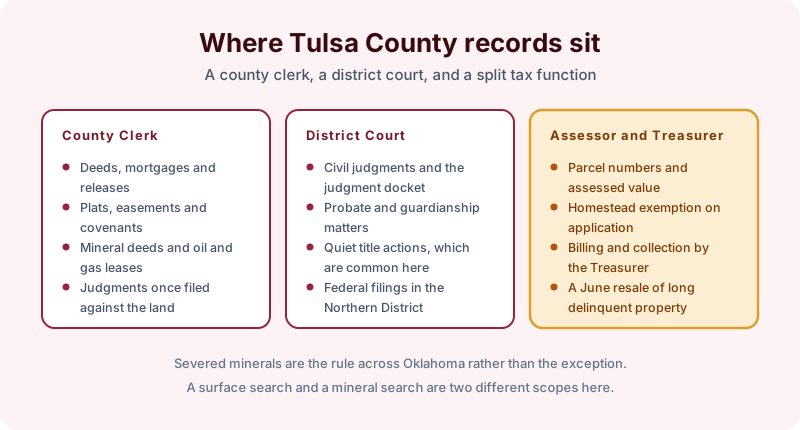
The County Clerk records deeds, mortgages, releases, plats, easements and covenants, along with the mineral deeds and oil and gas leases that make up a substantial share of the filings in any Oklahoma county. Judgments become liens on real property once properly filed.
The District Court holds the civil judgment docket, probate and guardianship matters, and the quiet title actions that fractional mineral ownership produces in volume here. Federal filings sit with the Northern District of Oklahoma.
The Assessor maintains parcel numbers and assessed values and administers the homestead exemption on application, while the Treasurer bills and collects. Long-delinquent property goes to a June resale, and title coming out of that process needs reading carefully.
What Complicates a Tulsa Chain
Three features account for most of the work beyond an ordinary search.
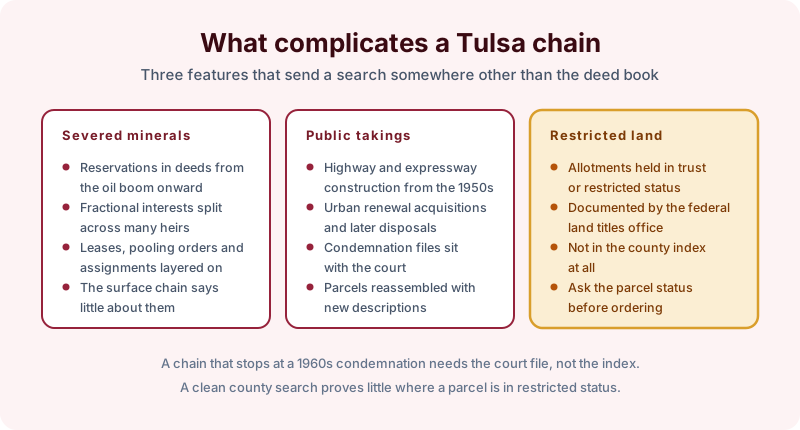
Severed minerals. Reservations appear in deeds from the oil boom onward, fractional interests have split across generations of heirs, and leases, pooling orders and assignments are layered on top. A surface chain tells you very little about who holds the minerals, and the two searches have genuinely different scopes.
Public takings. Expressway construction from the 1950s onward and later urban renewal acquisitions took and reassembled substantial acreage, particularly north and east of downtown. Condemnation files sit with the court rather than the Clerk, parcels came back out with new legal descriptions, and a chain that simply stops at a 1960s acquisition needs the court file rather than another pass through the index.
Restricted land. Allotments held in trust or restricted status are documented through federal land titles records and do not appear in the county index. A county search on such a parcel will correctly return very little, which is an accurate answer to a question the county record cannot address.
The three interact more often than they sit apart. A parcel taken for a highway in 1962 and sold back out of public ownership in 1978 may carry a surface chain that begins at the disposal deed, with the mineral estate severed decades before the taking and entirely untouched by it. Reading only the post-1978 surface chain produces an accurate and badly incomplete answer, and the only way to see the rest is to search back past the acquisition rather than back to it.
What Else Is Worth Knowing
- Oklahoma uses mortgages rather than deeds of trust in most transactions, and foreclosure is ordinarily judicial, so a foreclosure in the chain means a court file.
- There is no state transfer tax beyond a documentary stamp, which limits the cross-check a stamp provides elsewhere on recited consideration.
- Older Tulsa subdivisions carry long covenant histories, with restrictions from the 1910s and 1920s still recorded against the land.
- Entity ownership is common across both the rental stock and mineral holdings, so name searches have to cover every variant.
Ordering a Tulsa County Search
Give us the property address, the parcel number if you have it, and every name the property may be held under, including entity names and family names where minerals may be involved. Tell us whether you need the surface, the minerals or both, because that is the single decision that most changes the scope.
For a purchase or refinance a current owner search with judgment and lien searches usually fits. Where minerals, a condemnation or a resale deed sits in the chain, a full chain of title search is the safer scope.
A title search reports what was recorded and found in the indexes reviewed, as of the day the work was done. It does not establish present mineral ownership, which is a legal conclusion for counsel, and it does not reach federal land titles records.