

Searching Wake County Property Records
Wake County covers Raleigh and the towns around it, and it has grown fast enough that a great many parcels have short, clean chains. The reason to pay attention here is not complexity in the record. It is that North Carolina decides priority by a rule most states abandoned long ago, and the rule is unforgiving.
Get the recording order right and the rest of a Wake County search is ordinary.
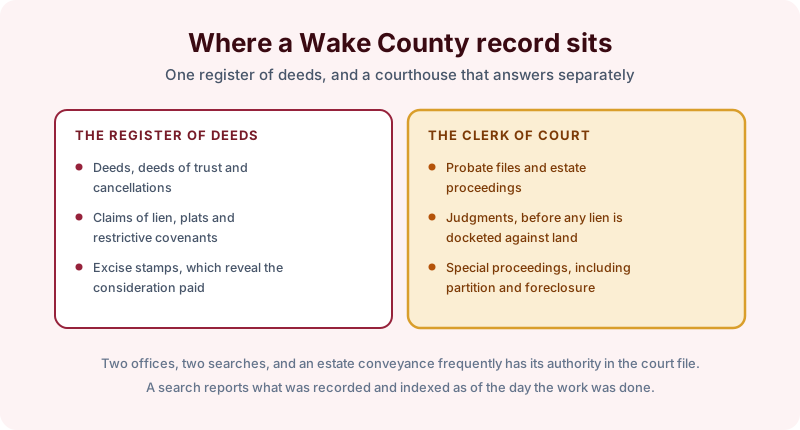
Two offices, two different questions
The register of deeds holds the land records. Deeds, deeds of trust and cancellations, claims of lien, plats, restrictive covenants and easements, indexed by party name. North Carolina uses a deed of trust rather than a mortgage, and the discharge is recorded as a cancellation.
The clerk of superior court holds a great deal that a land search still needs. Probate and estate files, judgments before any lien is docketed, and special proceedings including partition and the foreclosure of a deed of trust. An estate conveyance frequently has its authority in that court file rather than in anything the register of deeds holds, so a chain running through a death means two searches rather than one.
One useful feature of the North Carolina record is the excise stamp. The state levies a transfer tax calculated on the consideration, and the stamp is recorded on the deed, which means the price paid is generally derivable from the record. That is the opposite of the non-disclosure states and it makes value research here considerably easier.
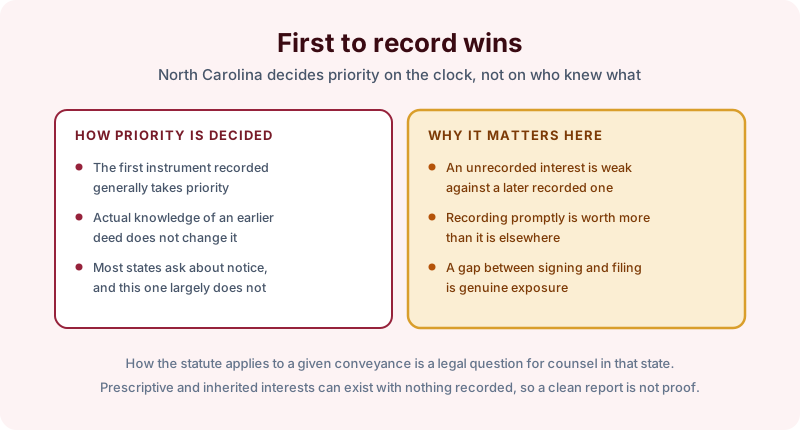
First to record generally wins
Most American states resolve competing claims by asking who knew what. A later buyer who knew about an earlier unrecorded deed usually loses. North Carolina is one of a small number of pure race states, and under its recording statute the contest is largely decided by who reached the register of deeds first.
Actual knowledge of an earlier conveyance does not, on its own, defeat a party who recorded first. That is a genuinely different rule and it has two consequences worth stating plainly. Recording promptly matters more here than in most places, and the gap between signing an instrument and filing it is real exposure rather than an administrative detail.
How the statute applies to any particular conveyance is a legal question for a North Carolina attorney. What a search does is establish the recording order precisely, with dates and times where the register captures them, which is the factual foundation the analysis needs.
It also raises the value of searching right up to the moment of closing. In a state where the clock decides, a search run a week before a transaction leaves a week in which somebody else can record ahead of you, and an update immediately before filing is cheap relative to what it protects.
The towns inside the county
Raleigh, Cary, Apex, Wake Forest, Garner, Holly Springs and several more sit inside Wake County, each with its own government and its own ordinances. Land records for all of them sit with the county register of deeds, so the search does not change with the municipality.
What does change is everything regulatory. Zoning, permits, code enforcement and municipal charges are held by whichever town imposed them, and none of it is a land records question unless it was reduced to a recorded lien. A buyer assuming Raleigh rules apply to an Apex parcel has assumed wrong.
Subdivision covenants deserve the same care. The county has absorbed an enormous amount of new construction over the past thirty years, and each development recorded its own declaration with its own restrictions and its own amendments. Those run with the land, they bind whoever buys, and they are found in the register of deeds rather than at the town hall.
Ordering a Wake County search
Supply the street address, the parcel identification number, and the current owner name. Where the chain runs through an estate, say so, because the probate file at the clerk of court is a separate search and it is frequently where the conveyance is actually authorized.
A title search reports what has been recorded and indexed as of the date it is run, in the offices searched. It is not an inventory of municipal charges, and recording practice varies from one North Carolina county to the next.