

Searching Duval County Property Records
Property records for Duval County, Florida are recorded with the Clerk of the Circuit and County Courts, and the county is unusual in one structural respect. Jacksonville and Duval County consolidated into a single government in 1968, so the city and the county are the same entity for most purposes, and one recording office covers a land area larger than several states' largest counties.
That simplifies some things and complicates others. There is one place to record and one place to search. There are also four separate municipalities inside the county that kept their own governments, and a body of coastal and grant derived title that behaves nothing like the rest of Florida.
Where the Records Are Held
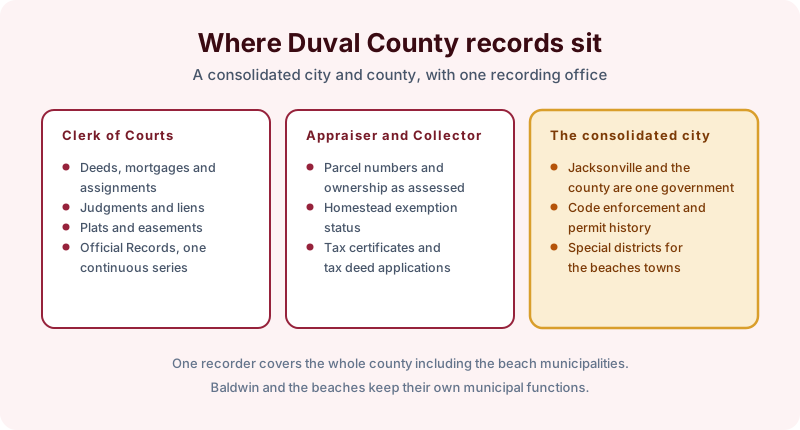
The Clerk maintains the Official Records, a single continuous series carrying deeds, mortgages, assignments, satisfactions, judgments, liens, easements and plats. Older instruments sit in the predecessor deed and mortgage books.
The Property Appraiser holds parcel identification and ownership as assessed, which is useful for locating a property and is not a record of title. The Tax Collector holds the tax account, the certificate history and any pending tax deed application.
Code enforcement and permit history sit with the consolidated city, and because the beaches municipalities and Baldwin kept their own governments, a property in Atlantic Beach or Jacksonville Beach may have its permit history in a different office than a property two miles inland.
What Complicates a Duval Chain
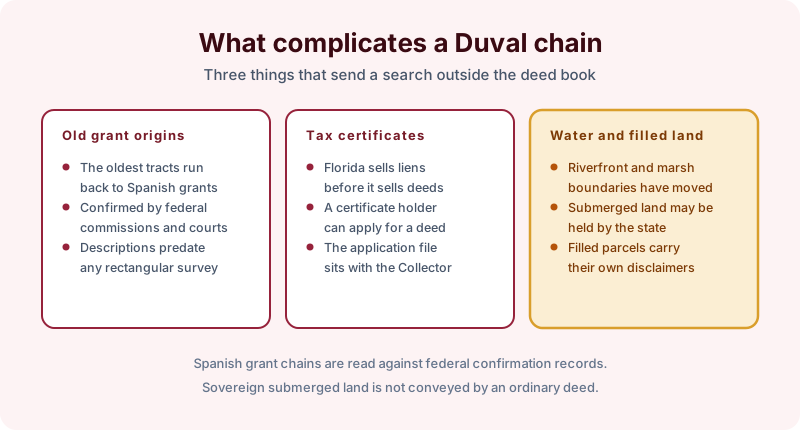
The oldest tracts in the county derive from Spanish land grants rather than from the rectangular survey. After Florida passed to the United States in 1821 those grants were confirmed through federal commissions and the courts, and the resulting descriptions follow the grant boundaries. A chain that reaches that far back is read against the federal confirmation record, not against a section and township description.
Florida's tax enforcement runs through certificates before it runs through deeds. Unpaid taxes produce a certificate sold to an investor, and after the statutory period the holder may apply for a tax deed, which the Clerk then sells. The application file and the notice history sit outside the Official Records, and both matter when a tax deed appears in a chain.
Water is the third. Riverfront and marsh boundaries in Duval County have moved, by accretion and by filling, and sovereign submerged land is held by the state rather than conveyed by an ordinary deed. Historic disclaimers issued over filled land are part of the chain on a great deal of the waterfront.
What Else Is Worth Knowing
Florida's marketable record title statute is consequential here and is frequently the fastest route to an answer. A root of title of sufficient age can extinguish older interests by operation of law, subject to a list of exceptions and to preservation notices that associations and other claimants may have filed. Checking for those notices is part of the work rather than an afterthought.
Construction liens are recorded against the property and the notice of commencement that precedes the work is recorded as well, which gives a searcher a date to reason from.
Documentary stamp tax appears on recorded deeds and notes, and the amount paid is a reasonable cross check on a stated consideration where the deed itself does not recite one.
Ordering a Duval County Search
Send the address, the real estate number from the Property Appraiser, and the owner name with any former names or entity names used. Tell us if the property is waterfront, if a tax deed appears anywhere in the chain, or if it sits in one of the beaches municipalities.
A current owner search covers the present vesting and the encumbrances against it. A full chain reaches back through the predecessor books and, where the tract requires it, into the grant confirmation record. We will scope it before anything is ordered.