

Searching Hennepin County Property Records
Hennepin County holds Minneapolis and about a quarter of Minnesota's population, and it runs a property records system that surprises people who have searched elsewhere. Two separate systems operate side by side in the same county, and which one a parcel sits in changes how the search is performed, what the report contains, and how long the work takes.
Abstract property and Torrens registered property
Most American land is what Minnesota calls abstract property. Ownership is proved by tracing the chain of recorded conveyances, reading each instrument in sequence, and satisfying yourself that the links hold. That is the familiar work, and it is what a title search means almost everywhere.
Minnesota also operates a Torrens system, and Hennepin County has a substantial amount of registered land. Under Torrens, title was established once through a court proceeding, and thereafter a certificate of title names the owner and lists the encumbrances that affect the parcel. The abstractor reads the certificate rather than rebuilding a chain, and an interest that is not noted on the certificate generally does not burden the property.
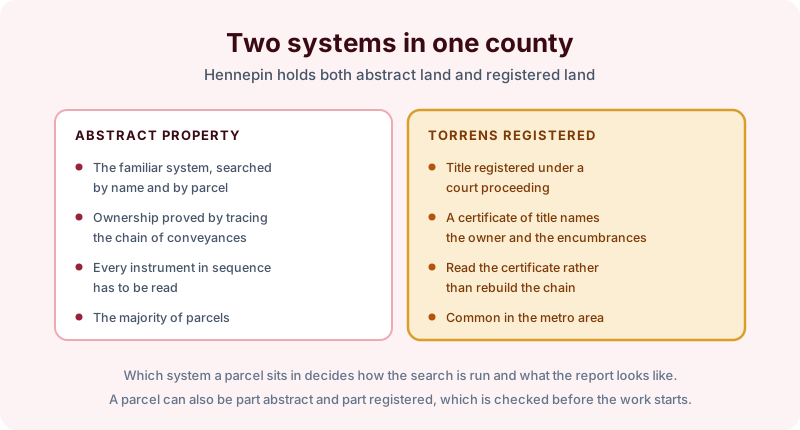
A parcel can also be part abstract and part registered, which happens when land was assembled from pieces that entered the systems separately. That is checked at the start, because getting it wrong means searching the wrong record.
Where the records are held
Recorded documents for abstract land and certificates for registered land are both maintained by the county's Recorder and Registrar of Titles, which are two functions of one office. Property tax and assessment information is administered separately, through the county's taxpayer services, and delinquency and forfeiture status live there rather than in the recorded index.
Judgments are docketed at the district court and reach real property through that docket, so a complete search reaches the court record as well as the recorder. Municipal claims behave differently depending on the city, and Minneapolis handles some obligations in ways the suburbs do not.
What the search returns and what it will not
On either system, the report gives you the ownership position, the mortgages and whether any have been satisfied, the recorded liens and docketed judgments, the easements and restrictions, and the tax status, with copies of the open instruments attached.
- It does not produce unrecorded agreements, leases, or interests that were never filed.
- It does not report work performed on the property that has not yet been liened, and Minnesota mechanic's lien rights can relate back to when work began.
- It does not establish who owns the property today as a legal conclusion. That is an attorney's opinion, drawn from the record.
Scoping a Hennepin search
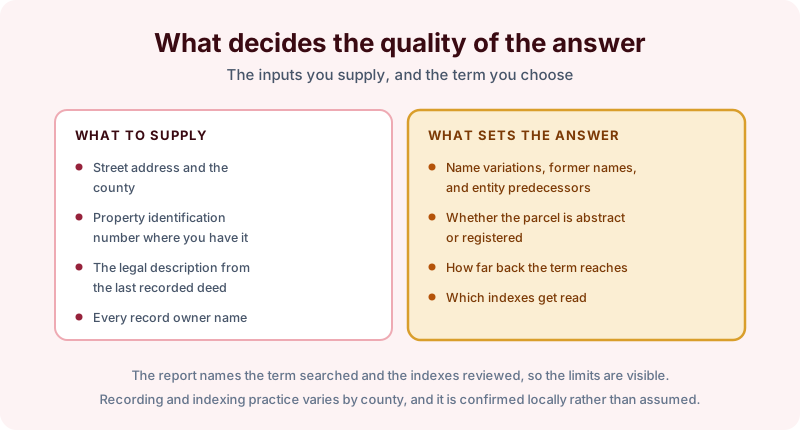
Send the street address, the property identification number if you have it, the legal description from the last recorded deed, and every record owner name including former names and any entity predecessors. Name variations matter here as much as anywhere, because a lien indexed under a former name stays indexed under that name.
Then set the term to the question. A closing usually asks about the current owner and what is against them. A boundary question, an old covenant, or a probate gap needs a term long enough to reach the instrument that created the problem. Recording and indexing practice varies by county, so we confirm the local specifics before the work starts rather than assuming them. Our guide to Oakland County title searches covers a comparable large metropolitan county in the upper Midwest.
AFX Research has searched Hennepin and every other Minnesota county since 1995, including in-person retrieval where an older instrument is not available as an online image.