

Searching Jackson County Property Records
Property records for Kansas City and the rest of Jackson County, Missouri are recorded with the Recorder of Deeds, and the first thing to establish on any Kansas City address has nothing to do with that office. The city spans four counties. A Kansas City parcel may sit in Jackson, Clay, Platte or Cass, and the mailing address will not tell you which.
Once the county is settled, Missouri behaves predictably. Loans are secured by deeds of trust, foreclosure is non-judicial through a trustee, and there is no transfer tax at all, which removes a cross-check that searchers in other states rely on.
Where the Records Are Held
Three offices between them hold what a search needs, and the county itself is unusual in having two courthouses.
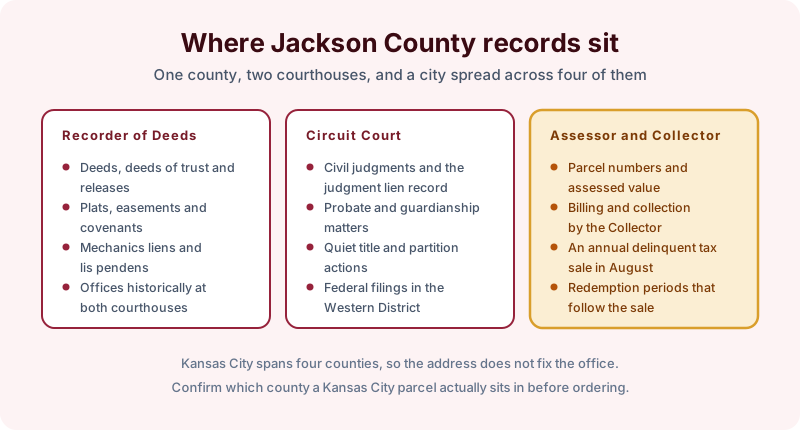
The Recorder of Deeds records deeds, deeds of trust, releases, plats, easements, covenants, mechanics liens and lis pendens. Jackson County operates from courthouses in both Kansas City and Independence, a split that reflects the county's history and that still shapes where some business is conducted.
The Circuit Court holds civil judgments and the judgment lien record, probate and guardianship matters, and the quiet title and partition actions that older urban chains produce. Federal filings sit with the Western District of Missouri.
The Assessor maintains parcel numbers and assessed values while the Collector bills and collects. Delinquent parcels go to an annual sale in August, and the purchaser receives a certificate of purchase rather than a deed, with a redemption period following.
How a Missouri Transfer Works
Three features shape what a searcher looks for, and the second of them removes a tool.
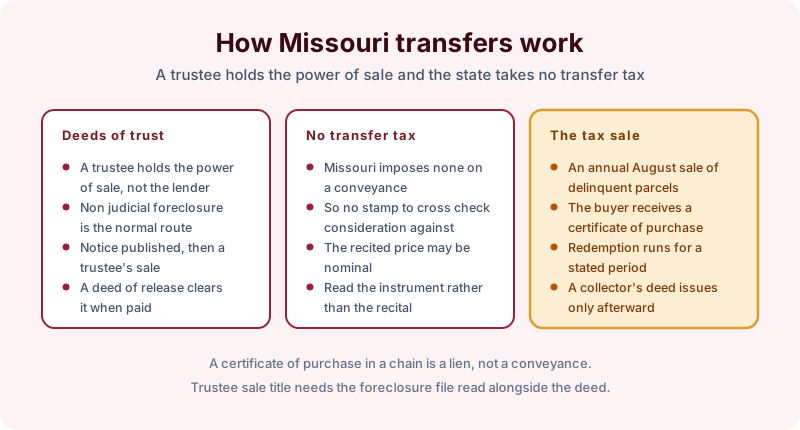
Deeds of trust. A trustee holds the power of sale rather than the lender, which permits non-judicial foreclosure. The sequence is published notice followed by a trustee's sale, and a deed of release clears the instrument when the loan is paid. A missing release is a common cloud on an older Missouri chain.
No transfer tax. Missouri imposes none on a conveyance, which means there are no stamps to cross-check a recited consideration against. A deed reciting one dollar tells you nothing in particular here, and the instrument itself has to carry the weight that a tax stamp carries elsewhere.
The tax sale. Delinquent parcels are offered at an annual August sale, the buyer takes a certificate of purchase, and a collector's deed issues only after the redemption period runs. A certificate sitting in a chain is a lien and is easy to misread as a conveyance.
What Makes Jackson County Specific
- The four-county city. Confirming which county a Kansas City parcel sits in is the first step, not an afterthought, and the answer changes which recorder holds the chain.
- Older urban chains run long. Parcels in the historic core carry nineteenth century conveyances, and subdivision restrictions from the 1910s and 1920s are still recorded.
- Reassessment has been contested. Recent assessment cycles produced widespread appeals, so the assessed value on a parcel may be under challenge.
- Entity ownership is heavy in the rental stock, and name searches have to cover every variant a company has used.
Ordering a Jackson County Search
Give us the property address, the parcel number if you have it, and every name the property may be held under, including entity names and any former names of an individual owner. Confirm the county if the address is a Kansas City one, because that single fact decides where the search runs.
For a purchase or refinance a current owner search with judgment and lien searches usually fits. Where a trustee's sale, a tax sale certificate or an estate sits in the chain, a full chain of title search is the safer scope.
A title search reports what was recorded and found in the indexes reviewed, as of the day the work was done. It does not establish amounts owed, which come from the Collector and the lender, and it is not a legal opinion on what any recorded instrument means.