

Maryland Lien Search: What the Record Shows, County by County
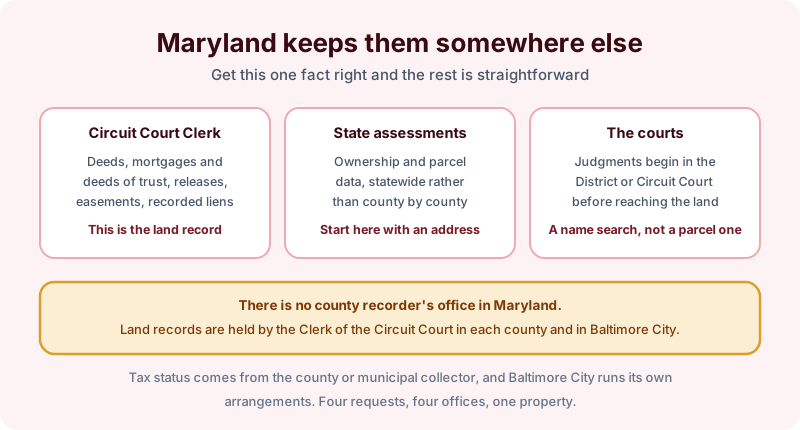
Searching for liens on Maryland property is a different exercise from searching in most other states, and the reason is structural: Maryland does not keep its land records at a county recorder's office. They are held by the Clerk of the Circuit Court in each of the twenty-three counties and in Baltimore City.
Get that one fact right and the rest of a Maryland lien search becomes straightforward. Get it wrong and you will spend an afternoon looking for an office that does not exist.
Where Maryland keeps the records
- Land records are recorded with the Clerk of the Circuit Court for the county where the property sits. Deeds, deeds of trust, mortgages, assignments, releases, easements and recorded liens all live here.
- Assessment and ownership data comes from the State Department of Assessments and Taxation, which is a statewide system rather than a county one. This is the usual entry point when you only have an address.
- Judgments originate in the District Court or the Circuit Court, and a judgment generally has to be recorded or indexed against the land to reach the property.
- Tax status comes from the county or municipal collector, and Baltimore City runs its own arrangements.
As in every state, the land records are indexed by party name rather than by street address, so an address search starts with the assessment data to get the owner of record and the parcel identifier.
What to search for
A lien search is only as good as the list of things it looks for. On Maryland residential and commercial property the recurring items are:
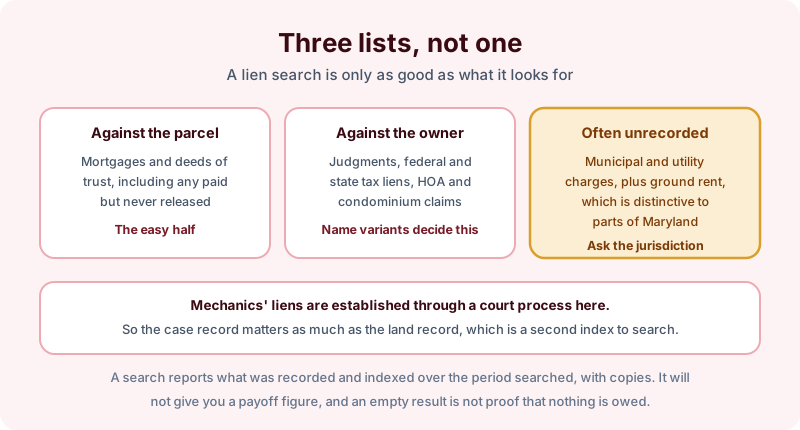
- Mortgages and deeds of trust, including any that were paid but never released.
- Judgment liens against the owner, which is a name search rather than a parcel search.
- Federal and state tax liens, which are filed against a taxpayer and depend on the name being right.
- Mechanics' liens, which in Maryland are established through a court process rather than by simple filing, so the case record matters as much as the land record.
- Homeowners and condominium association liens, plus any recorded declaration that creates the assessment obligation.
- Ground rent, which is distinctive to parts of Maryland and to Baltimore in particular, and which is an interest a buyer needs to understand rather than a lien to pay off.
- Municipal and utility charges, which frequently never reach the land records at all and have to be requested from the jurisdiction.
Name searches are where lien searches fail
Recorded liens against a parcel are the easy half. The hard half is everything filed against the owner, because those indexes are alphabetical and unforgiving.
An owner who has used a maiden name, a middle initial, a trade name, or who holds the property through an LLC or a trust will appear under whichever name was current when each document was filed. A search run on one spelling returns a clean result while a docketed judgment sits a page away. This is a scoping problem rather than a search failure: a search covers the names it is given.
What a lien search cannot settle
A search reports what was recorded and indexed in that jurisdiction over the period searched, with copies of the instruments found. It will not give you a payoff figure, which comes from each lienholder. It will not tell you whether a lien is valid, enforceable, or correctly perfected, which are legal questions. And it cannot show an unrecorded claim or a municipal balance sitting on a billing system with nothing filed.
An empty result reflects the record. It is not proof that nothing is owed.
Ordering a Maryland search
For a specific property, a search of the Circuit Court land records plus a name search against the owner is the practical minimum, and adding the municipal and tax position makes it complete. Our guide to property title searches in Maryland covers the full title picture, and checking for liens on property explains the general process.
AFX Research has searched every Maryland county and Baltimore City since 1995, including in-person retrieval where the older Circuit Court indexes are not available online.