

Searching Pima County Property Records
Pima County covers Tucson and a wide stretch of southern Arizona, and its property record is arranged the way most of the state's is, across four offices that keep separate indexes. A deed sits in one of them. The parcel number and the tax bill sit in two more. A judgment against the owner sits in a fourth that is not part of the land records at all.
Knowing which office answers which question is most of the work.
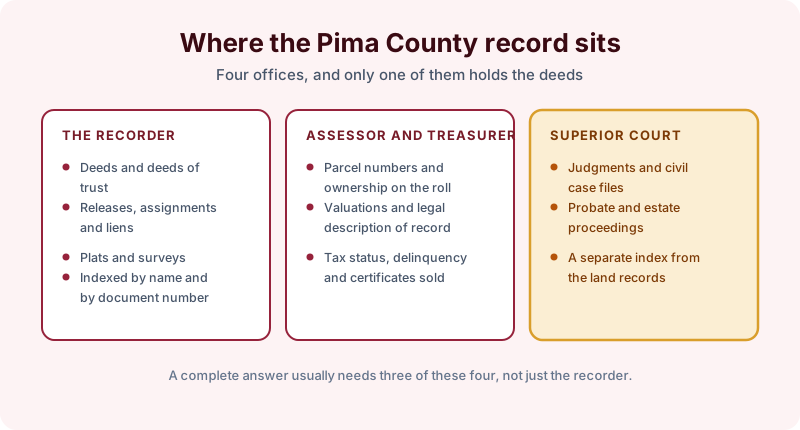
Four offices hold the Pima County record
The county recorder holds the land side. Deeds, deeds of trust, releases, assignments, mechanic's liens, plats and surveys are recorded there and indexed by name and by document number. That index is where a chain of title is actually built.
The assessor maintains parcel numbers, the ownership shown on the roll, and the valuation. It is the fastest way to get from a street address to a parcel, and it is not evidence of ownership. The roll follows the recorded deeds rather than the other way round, and it can lag them.
The treasurer holds the tax position, including delinquency and any tax lien certificate sold against the parcel.
The clerk of the superior court holds judgments, civil case files and probate. That index is organized by party name and nothing in it is keyed to the land, so a search that stops at the recorder will not find a judgment against the owner.
Arizona lends on deeds of trust, and the chain shows it
Most Arizona lending is secured by a deed of trust rather than a mortgage, with a trustee holding a power of sale. The practical consequence for a records search is what a default looks like in the index. A notice of trustee's sale is recorded, the sale is conducted outside court, and a trustee's deed is recorded afterward.
That produces a chain containing a conveyance nobody negotiated, and the instruments around it are worth reading rather than counting. A trustee's deed conveys what the deed of trust and the notice allowed it to convey. Interests junior to the deed of trust are generally cut off and senior ones are not, which is the whole reason the recording dates matter.
Releases are the other half of the same story. A deed of trust that was paid off is cleared by a recorded release, and a release that was never filed leaves a lien of record securing a loan that no longer exists. On older Tucson property that is one of the more common findings, and clearing it means tracking down a lender that has usually been acquired at least once.
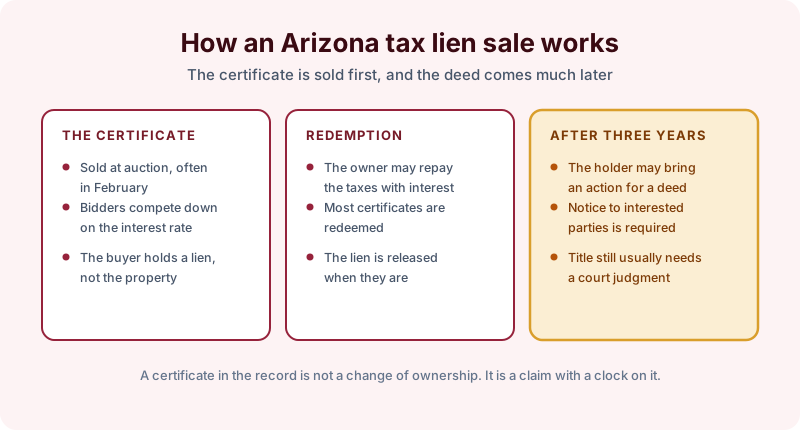
What a tax lien certificate means when you find one
Arizona sells tax lien certificates rather than tax deeds. Delinquent taxes are auctioned, commonly in February, and bidders compete by bidding the interest rate down. The buyer holds a lien against the parcel, not the parcel itself.
The owner may redeem by repaying the taxes with interest, and most certificates are redeemed. Only after three years may a certificate holder bring an action to foreclose the right of redemption and ask for a deed, and that action requires notice to the parties with an interest in the property.
So a certificate turning up in a search is a claim with a clock on it rather than a change of ownership. What it tells you reliably is that the taxes went unpaid in a particular year, which is often the first visible sign that something else is wrong.
Ordering a Pima County search
Supply the street address, the assessor's parcel number and every name the property has been held in, including entity names and any spelling variant. Say whether the chain runs through an estate, a divorce or a trustee's sale, because each of those puts part of the answer in a court file rather than in the recorder's books.
A title search reports what was recorded and indexed in the offices searched, as of the day the work was done. It is not proof that nothing else exists, it is not a title insurance commitment, and it is not a legal opinion. Unrecorded agreements, interests that passed at death with nothing filed locally, and boundary questions that need a survey all sit outside it. Recording and indexing practice varies from one Arizona county to the next, so our report names the indexes reviewed and attaches copies of what was found.