

Searching Ramsey County Property Records
Property records for St. Paul and the rest of Ramsey County, Minnesota are held in two separate systems rather than one. Abstract property is recorded with the County Recorder in the way most states operate. Torrens property is registered with the Registrar of Titles under a court-issued certificate, and Minnesota is one of the few states where that system is still in active use.
Establishing which system a parcel sits in is the first step, because searching the wrong one returns nothing and nothing looks indistinguishable from a clean result.
Where the Records Are Held
Four functions across three offices, and the first two are the ones that catch people out.
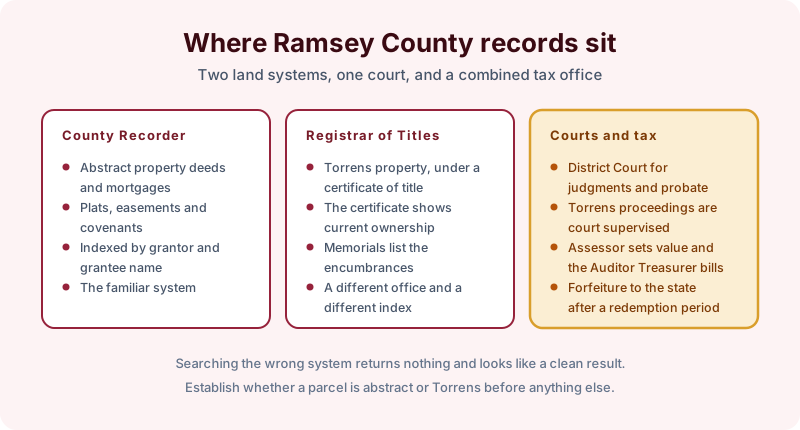
The County Recorder holds abstract property, indexed by grantor and grantee name, searched by reading the chain of recorded instruments. This is the familiar system.
The Registrar of Titles holds Torrens property, where a certificate of title states the current owner and memorials entered on that certificate list the encumbrances. The certificate is conclusive, which is the entire point of registration, and a parcel's status is a fact to confirm rather than assume.
The District Court handles judgments, probate and the proceedings that register or alter Torrens titles. The Assessor values property and the Auditor Treasurer bills and collects, with long-delinquent parcels forfeiting to the state after a redemption period rather than being sold at a county tax sale.
How a Minnesota Transfer Works
Three features shape what accompanies a deed to the counter.
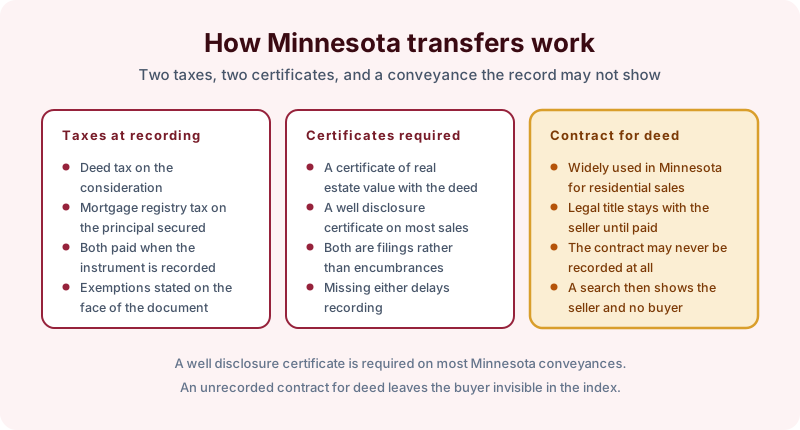
Taxes at recording. A deed tax is calculated on the consideration and a mortgage registry tax on the principal secured, both paid when the instrument is recorded. Because the deed tax is tied to price, it offers a useful cross-check on a recited consideration that other states lack.
Certificates required. A certificate of real estate value accompanies most deeds, and a well disclosure certificate is required on most transfers, disclosing whether the property has a well and its status. Neither is an encumbrance and a missing one will delay recording.
Contract for deed. Minnesota uses this instrument heavily in residential sales. Legal title stays with the seller until the price is paid, the buyer holds equitable title and possession, and the contract is frequently never recorded. A search then returns the seller with no indication that anybody else has an interest.
The two systems also interact at the edges, which is where errors happen. A parcel can be registered after decades as abstract property, so a chain crosses from one office into the other at a date nothing in either index announces. Land can also be split, with one portion registered and the remainder left abstract. Neither situation is unusual and neither is visible from a single system, which is why the status question is worth asking about the specific parcel rather than about the neighborhood.
What Makes Ramsey County Specific
- A substantial share of parcels are Torrens. Ramsey and Hennepin together account for much of the registered land in the state, so the question arises constantly here rather than occasionally.
- Older St. Paul chains run long, with nineteenth century conveyances and subdivision restrictions still recorded in the older neighborhoods.
- Tax forfeiture rather than tax sale. Title coming out of a state forfeiture is a different instrument from a tax deed, and it needs reading on its own terms.
- Entity ownership is common in the rental stock, so name searches need every variant a company has used.
Ordering a Ramsey County Search
Send us the property address, the parcel identification number if you have it, and every name the property may be held under. Tell us whether the parcel is abstract or Torrens if you know, and ask us to confirm it if you do not, because that single fact decides which office the search runs in.
A current owner search with judgment and lien searches covers most purchases and refinances. Where a contract for deed, a forfeiture or an estate sits in the chain, a full chain of title search is the more reliable scope.
A title search reports what was recorded and found in the indexes reviewed, as of the day the work was done. It does not establish amounts owed, which come from the Auditor Treasurer, and it is not a legal opinion on what any recorded instrument means.