

Searching Salt Lake County Property Records
Salt Lake County holds most of Utah's population along a narrow strip between the Wasatch Range and the Oquirrh Mountains, and a property search here runs into two things at once. The county keeps the recorded documents in the ordinary way, and a second body of record sitting entirely outside the county decides something that can matter more than any lien.
Where the recorded documents are kept
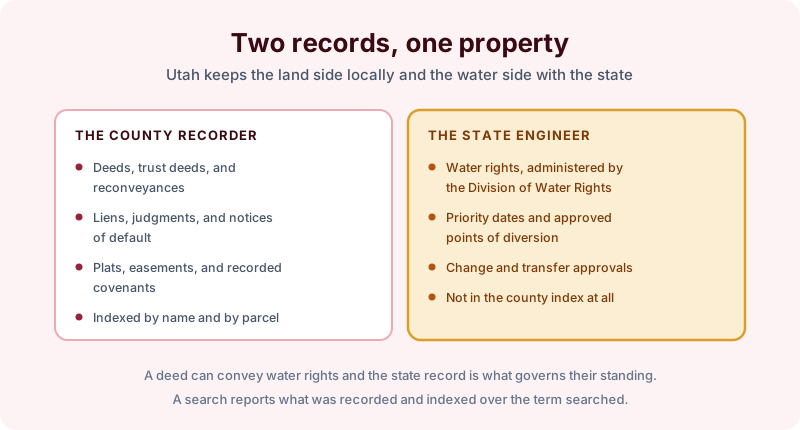
Recorded instruments for the county are held by the Salt Lake County Recorder. Deeds, trust deeds and their reconveyances, liens, judgments, notices of default, plats, easements, and recorded covenants are all indexed there, by name and by parcel, and that office is the primary source for any title search of a Salt Lake parcel.
Utah lending is normally secured by a trust deed rather than a mortgage, released by a recorded reconveyance rather than a satisfaction. The vocabulary differs from mortgage states and the recorded trail works the same way, which matters mainly when you are reading a report and looking for a document that is filed under a name you did not expect.
The water record is not in the county
This is the part that surprises people who have searched elsewhere. Utah is a prior appropriation state, so a water right is separate property with its own priority date, and it is administered by the Utah Division of Water Rights under the state engineer rather than by any county office.
A deed recorded in the county can convey or reserve water rights, and that conveyance is findable in an ordinary chain search. Whether the right is currently in good standing, what priority date governs it, and whether a proposed change would be approved are state questions the recorder has no record of. On agricultural ground, on a rural parcel at the edge of the valley, or anywhere irrigation is part of the value, both records have to be read.
Shares in a mutual water company or an irrigation company are a further variation and a common one along the Wasatch Front. Those shares can be certificated personal property that passes separately from the land, so a parcel that has always been watered may or may not still hold the shares that watered it. Where an instrument conveying or reserving them was recorded, the search will find it.
What a title search on a Salt Lake parcel returns
An abstractor establishes the chain of ownership over the term searched, identifies the trust deeds and whether any have been reconveyed, and pulls the recorded liens, abstracts of judgment, and state or federal tax liens indexed against the parcel and the owner names supplied.
- The legal description and how it has been described across the chain, which on older valley parcels frequently predates the current subdivision plats.
- Recorded easements for access, utilities, and irrigation ditches, plus any covenants binding the parcel.
- Special districts and assessments, which are common across the valley and which ride on the tax bill rather than appearing as a conventional lien.
Scoping the search before you order
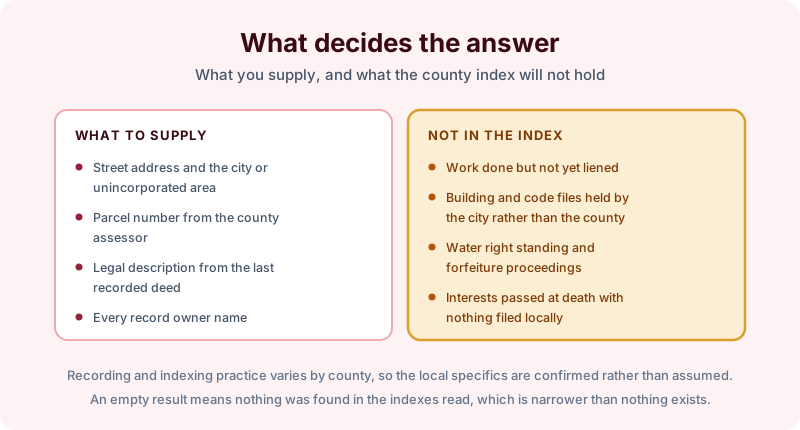
Send the street address and whether the property sits in a city or in unincorporated county, the parcel number from the assessor, the legal description from the last recorded deed, and every record owner name rather than only the one on the purchase agreement. Where the owner is an entity, include prior entity names, since a lien recorded against a former name is indexed under that former name.
Then set the term to the question. A refinance is asking about the current owner. A question about an old easement, a mineral reservation, or a water right conveyed decades ago needs a term long enough to reach the instrument that created it. Our guide to Clark County title searches covers a neighboring western metropolitan county where the offices are organized differently again.
AFX Research has searched Salt Lake and every other Utah county since 1995, including in-person retrieval where an older instrument is not available as an online image.