

Searching Middlesex County Property Records
Middlesex County is the most populous county in Massachusetts, and a search here has to answer a question that does not arise in most of the country before it can begin. There is no single Middlesex registry, and there are two different systems of title running side by side within it.
Two districts, not one county office
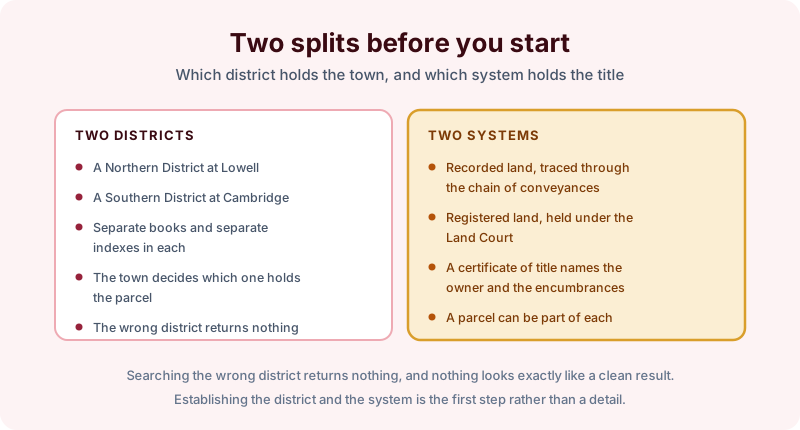
Massachusetts divides several counties into registry districts, each with its own Registry of Deeds and its own separate set of books and indexes. Middlesex is split into a Northern District at Lowell and a Southern District at Cambridge, and a parcel is recorded in one or the other according to which municipality it sits in.
That matters immediately and practically. Searching the wrong district returns nothing, and returning nothing looks exactly like a clean result. Establishing which district holds the town in question is the first step of any Middlesex search rather than an administrative detail, and it is the single most common way an out of state searcher goes wrong here.
Recorded land and registered land
The second split is between two systems of title. Most parcels are recorded land, where ownership is proved by tracing the chain of conveyances in the ordinary way.
Some parcels are registered land, brought under the jurisdiction of the Massachusetts Land Court through a registration proceeding. For those, a certificate of title names the owner and lists the encumbrances, held in a separate registered land section of the same registry. The abstractor reads the certificate rather than rebuilding a chain, and an interest not noted on the certificate generally does not burden the parcel.
A single parcel can also be part recorded and part registered, which happens when land was assembled from pieces that entered the two systems separately. That is checked at the start, because it decides which record is being read.
Registration was voluntary and largely a twentieth century exercise, so registered parcels cluster in some towns and are almost absent in others. There is no way to tell from an address which system applies, and assuming the ordinary one because it is more common is how a search ends up looking in the wrong section of the right registry.
What the search returns and what it does not
On either system the report gives you the ownership position, the mortgages and whether any have been discharged, the recorded liens and attachments, the easements and restrictions, and the tax status, with copies of the open instruments attached.
Massachusetts attachments deserve a specific mention, since they behave differently from a judgment lien in most states. An attachment is recorded to secure a claim while litigation is still pending, so it can sit against a parcel long before anyone has won anything, and it is an ordinary finding rather than an alarming one.
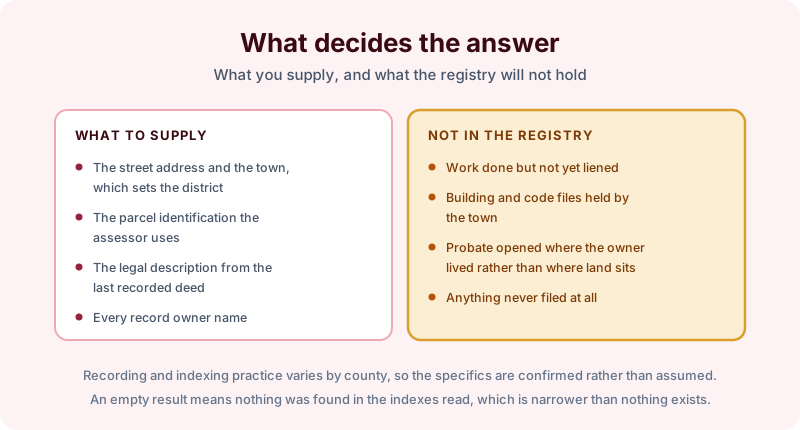
- It does not report unrecorded agreements, leases, or interests that were never filed.
- It does not report work performed on the property that has not yet been liened.
- It does not establish who owns the property today as a legal conclusion. That is an attorney's opinion, drawn from the record.
Scoping a Middlesex search
Send the street address and the town, because the town is what determines the district. Add the parcel identification the assessor uses, the legal description from the last recorded deed, and every record owner name including former names and any entity predecessors. Name variations matter here as much as anywhere, since a lien indexed under a former name stays indexed under that name.
Then set the term to the question, since a closing usually asks about the current owner while a boundary question or an old restriction needs a term long enough to reach the instrument that created it. Recording and indexing practice varies by county, so we confirm the local specifics before the work starts rather than assuming them. Our guide to Hennepin County property records covers another county running two title systems side by side.
AFX Research has searched Middlesex and every other Massachusetts county since 1995, including in-person retrieval where an older instrument is not available as an online image.